Why enrichment matters and what it actually costs
Boredom in pets is not a minor inconvenience. Dogs and cats that lack mental and physical stimulation often develop behaviors like destructive chewing, excessive vocalization, or repetitive movements. These are signals that an animal's environment is not meeting its needs, not signs of a difficult personality.
Enrichment does not require a large budget. The activities that work best are those that engage an animal's natural instincts: sniffing, hunting, foraging, exploring, and problem-solving. Most of these can be done with items already in your home. The effort involved is time, not money.
This also fits within a broader approach to sensible pet ownership. Knowing which pet care costs are worth spending on helps families direct money where it matters most and get creative where it does not.
What you will need
Step-by-step: activities to start this week
Assess your pet's age, ability, and personality
Before building or setting up anything, take stock of what your pet can realistically handle. A senior dog with joint issues needs different activities than a healthy two-year-old. Cats with vision problems may not respond to fast-moving objects. Spend a few minutes watching how your pet normally plays: does the dog prefer chasing, sniffing, or chewing? Does the cat swat at things moving overhead or hunt low to the ground?
This observation shapes every activity you introduce. Enrichment that suits a pet's natural tendencies works better and holds attention longer.
Build a sniff-work station from household containers
Dogs have an exceptional sense of smell, and using it tires them out mentally. Set up a muffin tin, egg carton, or a row of small cups on the floor. Drop a piece of kibble into some compartments and cover all of them with tennis balls or crumpled paper. Let your dog sniff out which compartments have food.
For cats, sprinkle a few small treats inside a cardboard egg carton and fold it closed loosely. The cat has to figure out how to open it. This kind of puzzle feeding, often called nose work or foraging, draws on instincts the animal already has.
Create a cardboard box obstacle course or hideout
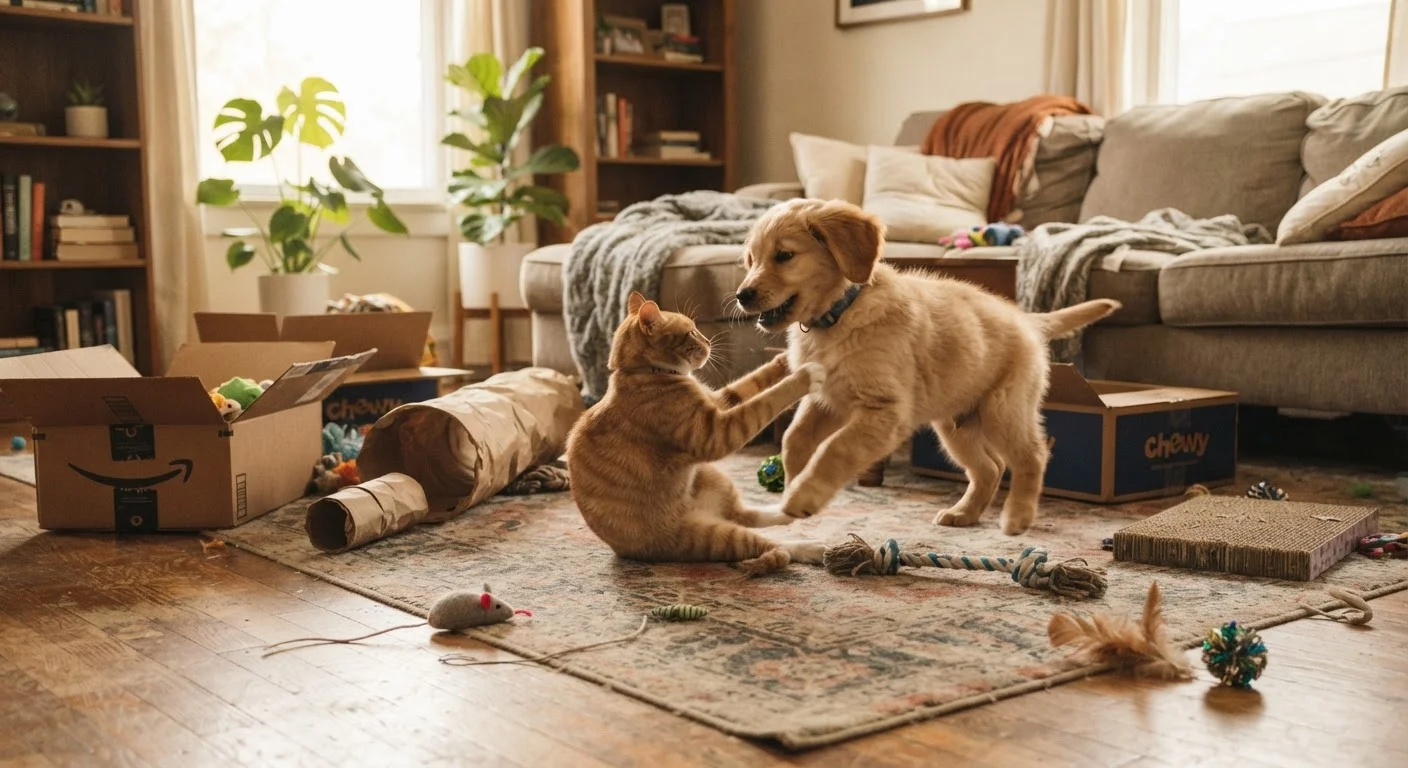
Collect a few cardboard boxes of different sizes. For cats, cut holes in the sides large enough to crawl through, stack two boxes with an opening between them, or simply leave a large box on its side with a soft cloth inside. Cats use elevated and enclosed spaces to feel secure, and a box structure satisfies that without any cost.
For dogs, arrange boxes, chairs, and rolled blankets into a simple course. Guide the dog through it using a treat or a favorite toy. Keep the setup low and stable so there is no risk of tumbling.
Introduce rotation to prevent boredom
A puzzle or toy a pet sees every day loses its appeal quickly. Put current items away for a week and bring out something the pet has not seen recently. Even a familiar object feels new after a break. Rotate between sniff games, physical play, and independent exploration activities across the week.
Paired with good nutrition, this approach supports overall wellbeing without ongoing expense. For more on where to direct your pet care budget, see what you actually need to spend on pet care.
Use training sessions as mental exercise
A five-minute training session taxes a dog's brain more than a twenty-minute walk on a familiar route. Practice known commands in new locations around the house, or teach a simple new behavior like touching a target with a nose or paw. Short sessions repeated a few times per week maintain focus and give the dog a sense of structure.
Cats can also learn simple behaviors through reward-based training. Teaching a cat to sit, come to a specific mat, or touch a target stick takes patience but works with most cats willing to engage for a food reward.
Set up a window perch or outdoor viewing area
For cats, a window with a view of birds, squirrels, or even passing traffic provides passive enrichment that requires nothing from you after setup. A folded blanket or a sturdy box placed on a stable surface near a window works as a perch. If the window can be safely screened, cracking it to let in outdoor smells adds another layer of stimulation.
Dogs benefit from outdoor time that goes beyond a standard walk. Let a dog spend time in a fenced yard sniffing freely, or vary the walking route regularly. New smells on a new route engage the brain in a way a familiar sidewalk does not.
These activities work across most households with minimal setup. The goal is consistency over intensity. A few short sessions spread across the week will do more for your pet than one long session on the weekend.
Troubleshooting: when your pet ignores the activity
Some pets take longer to engage with novel activities, particularly rescues or animals with limited early socialization. If a dog walks past the muffin tin without interest, try placing a stronger-smelling treat inside, or guide the dog to the game a few times before stepping back.
Cats may need several exposures before investigating a new object. Leave the box or puzzle in place and let the cat approach on its own schedule. Forcing interaction usually produces the opposite result.
Start with what the pet already likes
If your dog already shows interest in sniffing or your cat already bats at dangling strings, build the first activity around that behavior. Matching an activity to an existing preference gets faster engagement and tells you which instincts are strongest in that individual animal.
If a pet shows no interest in food-based puzzles, consider whether the animal is already full, stressed, or unwell. A sudden loss of interest in food or play warrants a veterinary check. For help finding affordable care, low-cost veterinary resources for American pet owners lists accessible options across the country.