How dry and wet food differ nutritionally
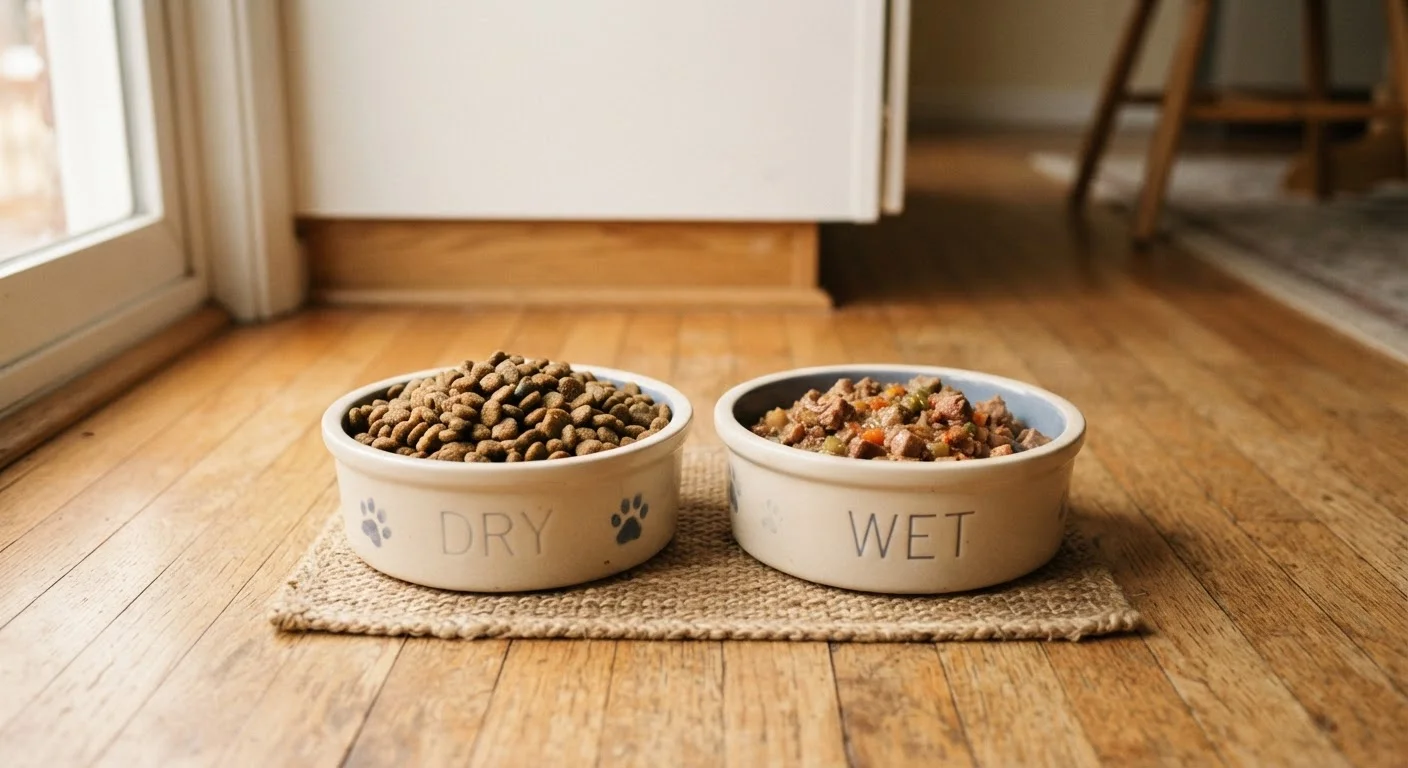
The most immediate difference between dry and wet pet food is water content. Dry kibble typically contains around 10% moisture, while wet food runs from 70% to 80%. That gap matters because moisture in food counts toward a pet's total daily water intake, something especially relevant for cats, which have a low natural thirst drive.
Beyond water, both formats can deliver complete and balanced nutrition, provided they meet the standards set by the Association of American Feed Control Officials (AAFCO). What actually determines nutritional quality is the ingredient list and guaranteed analysis on the label, not the format itself. A low-quality wet food is no better than a low-quality kibble, and vice versa.
Dry food is calorie-dense. Because moisture has been removed, a small volume of kibble contains more calories than the same volume of wet food. This means portion sizes for dry food are smaller by weight, which pet owners should account for when measuring servings. Wet food, being mostly water, provides fewer calories per gram, which can be useful for pets that need to lose weight or that eat slowly throughout the day.
Protein, fat, and carbohydrate levels vary widely within each format. Some kibbles are high in meat protein; others rely more on plant-based protein sources. The same variation exists in canned food. Comparing products on a dry-matter basis (stripping out moisture to compare like-for-like) gives a clearer picture than reading the label at face value. Your veterinarian can help interpret these numbers if the label feels confusing. For a broader look at how food format affects nutrient retention, the comparison of fresh, frozen, and canned produce offers a useful parallel from the human food side.
| Criterion | Dry food (kibble) | Wet food (canned/pouch) |
|---|---|---|
| Moisture content | Around 10% | 70% to 80% |
| Typical cost per serving | Lower | Higher (often 2-4x more) |
| Shelf life after opening | Weeks (airtight container) | 1 to 2 days (refrigerated) |
| Calorie density | High per gram | Low per gram |
| Palatability for picky eaters | Moderate | Generally higher |
| Ease of portion control | Easy to measure | Variable by container size |
| Dental abrasion benefit | Modest | Minimal |
| Best format for hydration | No | Yes |
Cost per serving: what the numbers actually look like
Dry food almost always costs less per serving. A 30-pound bag of kibble for a medium-sized dog might provide 120 or more daily portions, bringing the per-meal cost down considerably. Wet food in cans or pouches is sold in smaller units, and even when bought in multipacks, the cost per calorie is typically two to four times higher than comparable dry food.
Storage costs factor in too. An opened bag of dry kibble stays fresh for several weeks in an airtight container. Wet food, once opened, must be refrigerated and used within a day or two. For multi-pet households, that turnover is manageable; for single-pet households, waste from partially used cans can add up.
Feeding wet food exclusively to a large dog becomes expensive quickly. For cats, the portion sizes are smaller, so the cost gap narrows. Some cat owners find that feeding wet food once or twice daily, alongside a smaller kibble ration, keeps monthly costs reasonable while still adding meaningful hydration. For a fuller picture of where pet food fits within overall ownership costs, see what you actually need to spend on pet care.
70-80%
Moisture in wet pet food
Wet food's water content contributes meaningfully to a pet's daily hydration, particularly for cats that drink little water independently.
2-4x
Higher cost per calorie vs. dry food
Feeding wet food exclusively typically costs two to four times more per calorie than an equivalent dry food ration, based on general market pricing comparisons.
7-10 days
Recommended diet transition period
Veterinary guidance generally suggests transitioning pets between food types over one to two weeks to avoid digestive upset.
When format genuinely changes health outcomes
Format matters most in a few specific situations. Cats with lower urinary tract disease or chronic kidney disease often benefit from diets higher in moisture. Veterinary nutrition literature supports the idea that wet food helps dilute urine and reduce the concentration of minerals that form crystals or stones. For these cats, the added cost of wet food may be justified by reduced veterinary bills over time.
Senior pets and those recovering from oral surgery or dental extractions may struggle with hard kibble. Wet food removes that barrier and helps maintain caloric intake during recovery. Puppies and kittens transitioning from nursing sometimes accept wet food more readily as a first solid food.
Pets prone to overeating may do better on structured dry food portions, since kibble is easier to measure precisely. Wet food's softer texture can also mean it disappears from the bowl faster, which some dogs interpret as permission to beg for more. Weight management depends on total calories fed, not format alone, but portion control is easier to practice consistently with dry food.
One area where dry food carries a modest documented benefit is dental abrasion. Chewing kibble can help reduce tartar buildup compared to soft food, though veterinary dental chews and regular tooth brushing are more effective interventions. Wet food alone does not clean teeth and may increase plaque accumulation in pets that never receive any dental care. This is worth discussing with your veterinarian at annual checkups. You can also find practical perspective on separating marketing claims from actual evidence in our article on common myths about pet nutrition.
Making a practical choice for your household
For most healthy adult dogs on a moderate budget, dry food meets daily nutritional needs at a manageable cost. Adding a small amount of wet food as a topper a few times per week is a common approach that many pet owners find satisfying for both the pet and the wallet.
For cats, the hydration argument for wet food is stronger, and many veterinarians lean toward recommending at least partial wet feeding, particularly for indoor-only cats that drink little water on their own. Whether that means full wet feeding or a mixed approach depends on your cat's health history and your budget.
Whatever format you choose, consistency matters. Abrupt food changes can cause digestive upset in dogs and cats. When switching formats or products, transition gradually over seven to ten days by mixing increasing proportions of the new food with the old. If your pet has a diagnosed condition affecting diet, get specific guidance from your veterinarian before making changes.
For families thinking about the full financial picture of pet ownership, our pet care budget guide breaks down which costs are essential and where there is genuine room to economize. And if you are looking for ways to keep your pet engaged beyond mealtime, low-cost enrichment ideas for dogs and cats offers practical options that do not require much spending.
This article is for informational purposes only and is not a substitute for veterinary advice. Consult a licensed veterinarian before making significant changes to your pet's diet, especially if your pet has an existing health condition.