What the nutrition research actually says
The widespread belief that fresh produce is always the most nutritious option does not hold up consistently. USDA-funded research has found that freezing vegetables and fruit shortly after harvest locks in vitamins at levels comparable to, and sometimes higher than, produce that has sat in transit or on store shelves for several days. Water-soluble vitamins such as vitamin C and folate are particularly affected by time and temperature during distribution.
Canned produce undergoes heat processing, which reduces some heat-sensitive nutrients. However, minerals, fiber, and many antioxidants survive the process well. A 2007 study published in the Journal of the Science of Food and Agriculture found that canned tomatoes retain lycopene at levels similar to or greater than fresh because heat processing improves lycopene bioavailability. The picture varies by nutrient and by vegetable.
The practical takeaway: for most families eating a varied diet, the nutritional differences between forms are small enough that cost, convenience, and whether the food actually gets eaten are more relevant decision factors.
Cost per serving: a realistic comparison
Price comparisons between fresh, frozen, and canned depend heavily on the specific vegetable, the season, and the store. That said, consistent patterns show up across USDA Economic Research Service data on food-at-home spending.
| Fresh | Frozen | Canned | |
|---|---|---|---|
| Typical cost per serving | Moderate to high | Moderate | Low |
| Shelf life | Days to 1-2 weeks | 8-12 months (freezer) | 1-3 years (pantry) |
| Nutrient retention | High when very fresh | High; comparable to fresh | Good for most nutrients |
| Prep waste | Variable (trim loss) | Minimal | Minimal |
| Sodium/additives | None | Usually none | Often added; opt for no-salt |
| Best use | Raw dishes, garnishes | Cooked dishes, smoothies | Soups, stews, legumes |
| Seasonal price swings | Significant | Minimal | Minimal |
Fresh produce prices fluctuate with season and origin. Strawberries in January cost roughly three times their summer price in many U.S. markets. Out-of-season fresh items almost always cost more per serving than their frozen equivalents.
Frozen vegetables typically run $1.50 to $3.00 per pound across major U.S. grocers, with no prep waste. A bag of frozen peas has a usable yield of close to 100%, while fresh peas in the pod might yield 40-50% after shelling. Adjusting for prep waste often closes or reverses apparent price gaps between fresh and frozen.
Canned vegetables and legumes are consistently the lowest-cost form per serving, often under $0.50 per half-cup serving. The cost advantage is even larger for items like beans, tomatoes, and corn, where the canned version is widely available year-round at stable prices. See pantry staples that stretch your grocery dollar for how canned goods fit into a broader budget strategy.
Waste, shelf life, and household practicality
Food waste is a real cost that grocery comparisons routinely ignore. The USDA estimates that U.S. households waste between 30 and 40 percent of the food they purchase. Fresh produce, particularly leafy greens and soft fruit, accounts for a large share of that waste.
Frozen produce keeps for 8 to 12 months at standard freezer temperatures, and you use only what you need. Canned goods typically carry a shelf life of 1 to 3 years. Both forms reduce the pressure to use an ingredient within a narrow window, which matters for families who cook irregularly or buy in larger quantities to save money.
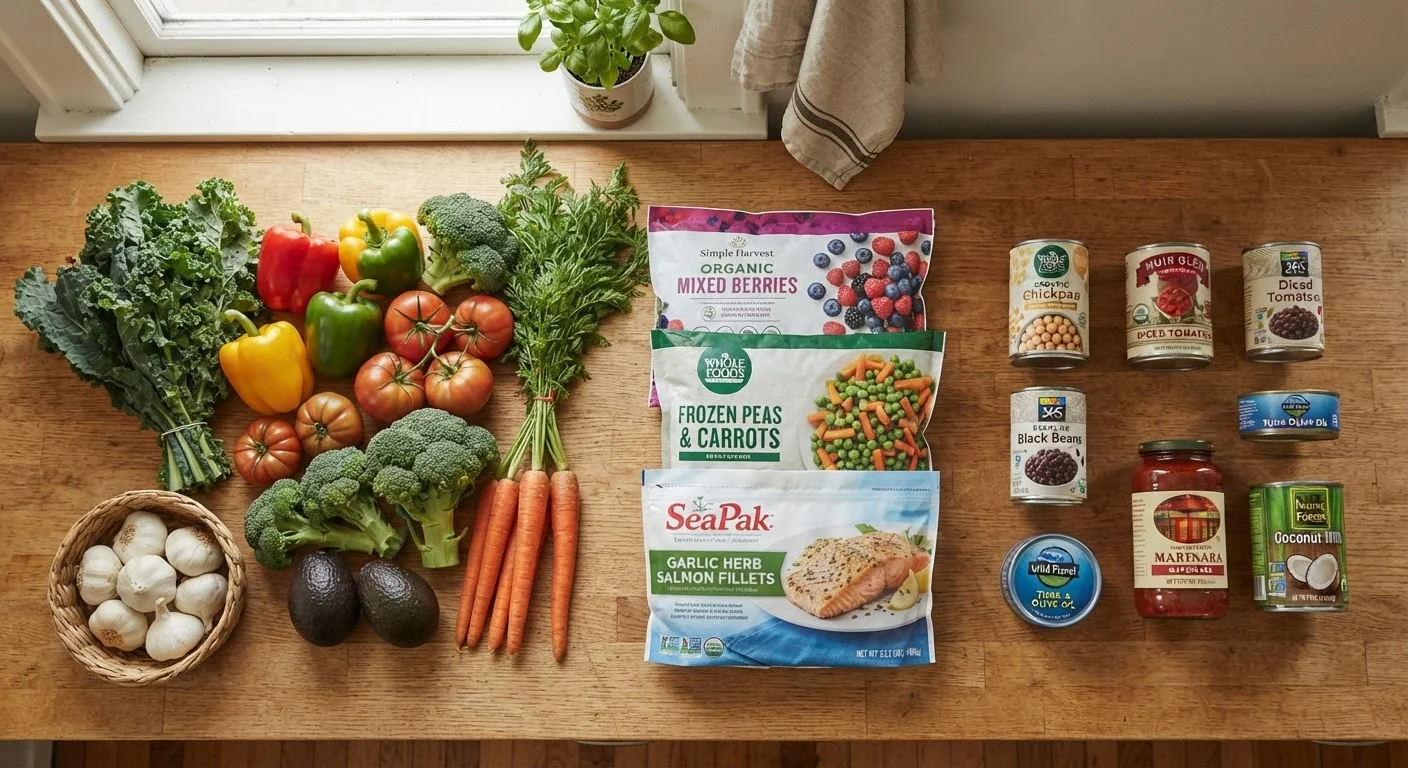
Use all three forms in the same week
Buying fresh only for what you will eat raw or within two days, keeping a frozen backup for cooked dishes, and stocking canned legumes and tomatoes for quick meals covers most meal types at a lower combined cost than buying fresh across the board. This approach also cuts food waste significantly for families who cook three to four nights a week.
Fresh produce is worth buying when you have a clear plan to use it within its shelf window, when it is genuinely in season and priced accordingly, or when the raw texture is important to the dish. A consistent grocery routine can help you time fresh purchases so spoilage stays low.
Sodium and additives in canned produce
The main nutritional concern with canned vegetables is sodium. A standard can of green beans may contain 300 to 400 mg of sodium per half-cup serving, compared to near zero in fresh or plain frozen versions. For families managing blood pressure or overall sodium intake, this is worth accounting for rather than ignoring.
Practical workarounds are straightforward. Many canned vegetables are available in no-salt-added versions at most major grocery chains, often at the same price as salted versions. Rinsing standard canned vegetables under water before cooking has been shown in multiple published studies to reduce sodium content by roughly 40 percent. Canned fruit carries a different concern: added sugar in syrup-packed varieties. Choosing fruit packed in juice or water addresses this without added cost in most stores.
Matching form to use case
The most practical framework is to choose the form based on how you intend to cook the ingredient.
- Raw salads, slaws, and fresh garnishes: fresh is the only realistic option for texture.
- Soups, stews, stir-fries, casseroles, and roasted dishes: frozen or canned work as well as fresh and usually cost less.
- Smoothies and pureed dishes: frozen fruit and vegetables are equally effective and often cheaper than fresh.
- Legumes (beans, lentils, chickpeas): canned versions save hours of cooking time and are priced well below fresh or dried when comparing convenience-adjusted cost per serving.
Applying this logic across a week of meals, most families will find they need fresh produce for a narrower set of uses than they assumed. That shift alone can reduce weekly grocery costs without any reduction in the variety or quality of meals.