Why a grocery routine matters more than any single trick
Coupons and flash sales get most of the attention in grocery savings conversations, but they produce inconsistent results. A weekly routine, repeated with small adjustments, compounds savings in a way that one-off tactics cannot. USDA data consistently shows that households that plan meals before shopping spend less per person and throw away less food than those that shop without a plan.
The routine described here has four phases: planning before the trip, organizing the list, navigating the store with intention, and storing food correctly afterward. Each phase feeds the next. Skipping one weakens the whole system.
For more on the budget impact of consistent planning, see feeding a family of four on a tight weekly budget.
Building the plan before you write the list
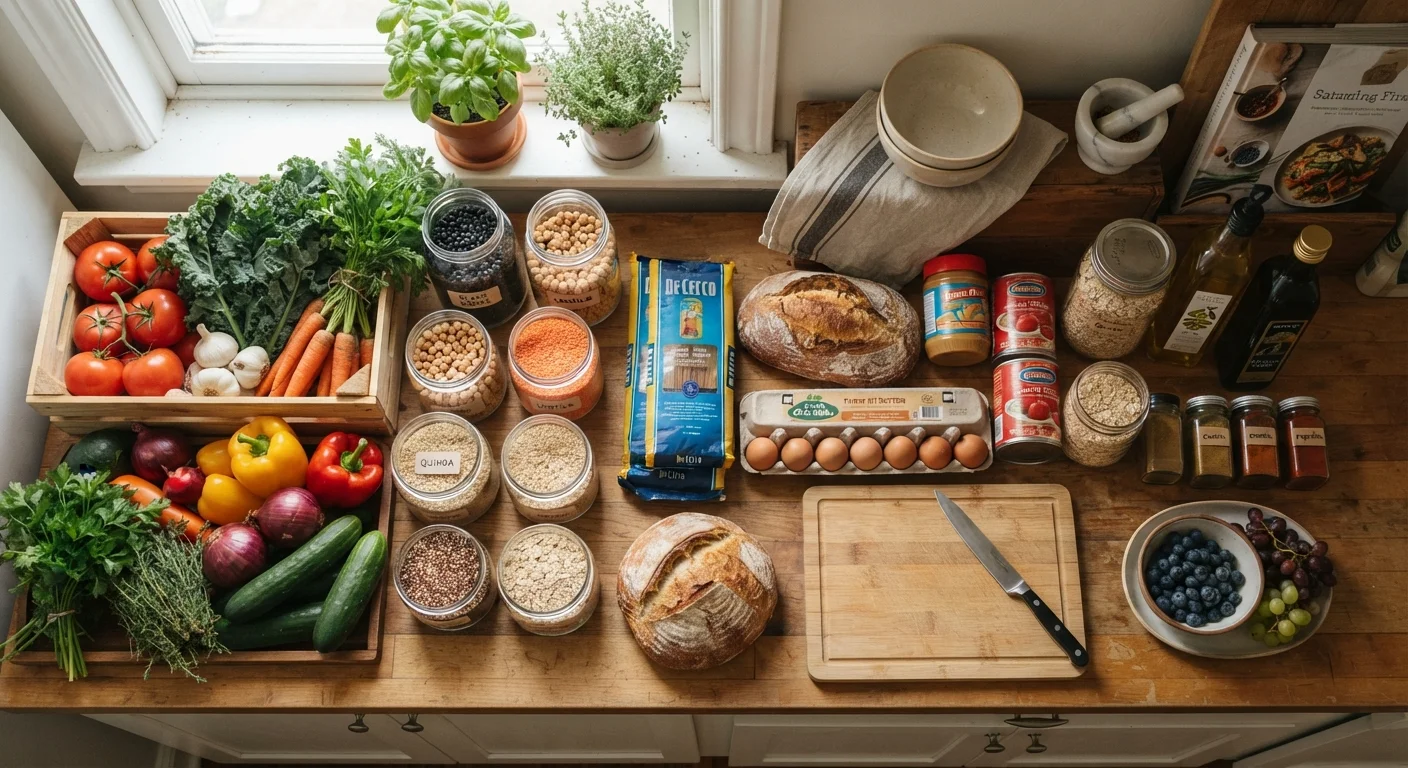
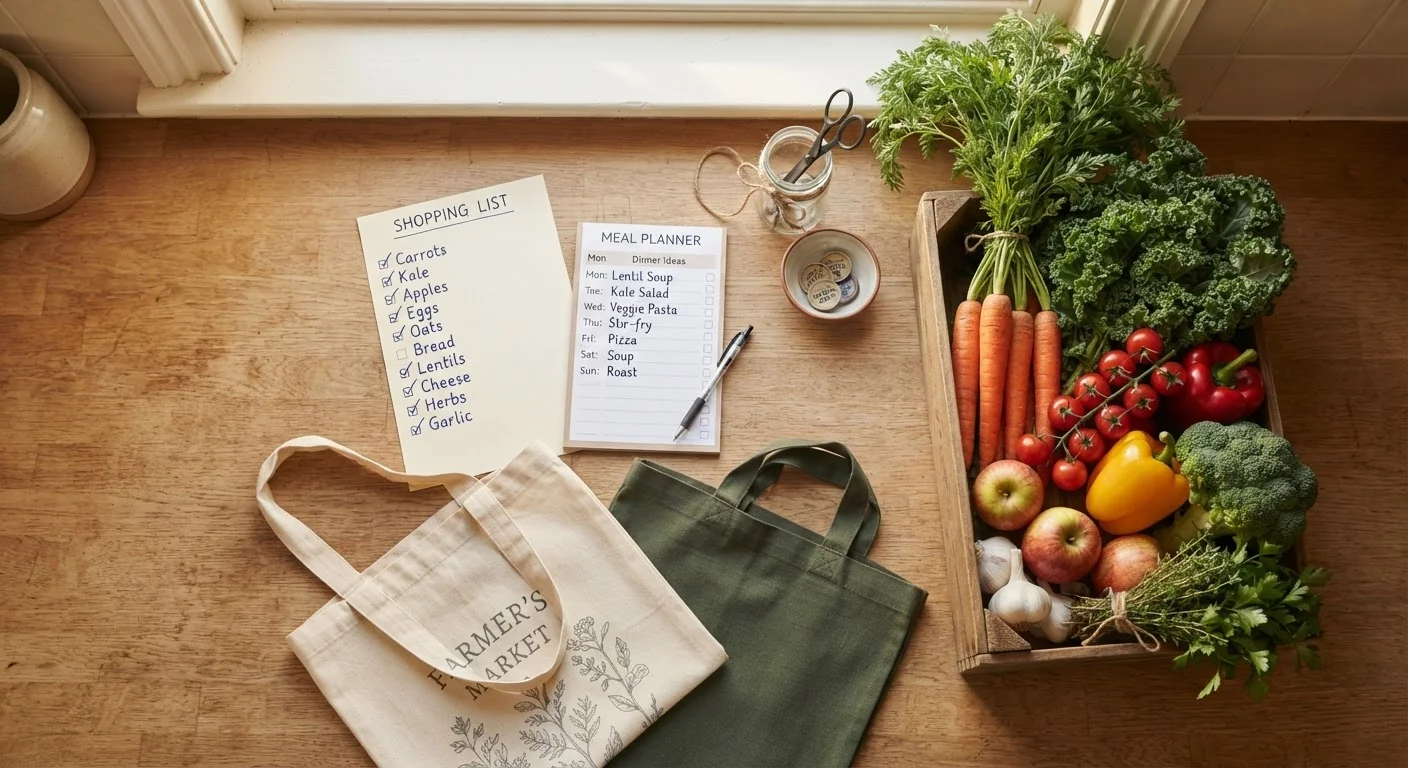
Start with a meal map for the week, not a product list. Write down every dinner, account for lunches built from leftovers, and note one or two breakfasts that need specific ingredients. Once meals are mapped, inventory what you already have. Many households overbuy staples simply because they skip this check.
Cross-reference your meal map against your pantry, refrigerator, and freezer before writing a single item. Anything already on hand gets removed from the list. This step alone tends to trim lists by 15 to 20 percent for most families.
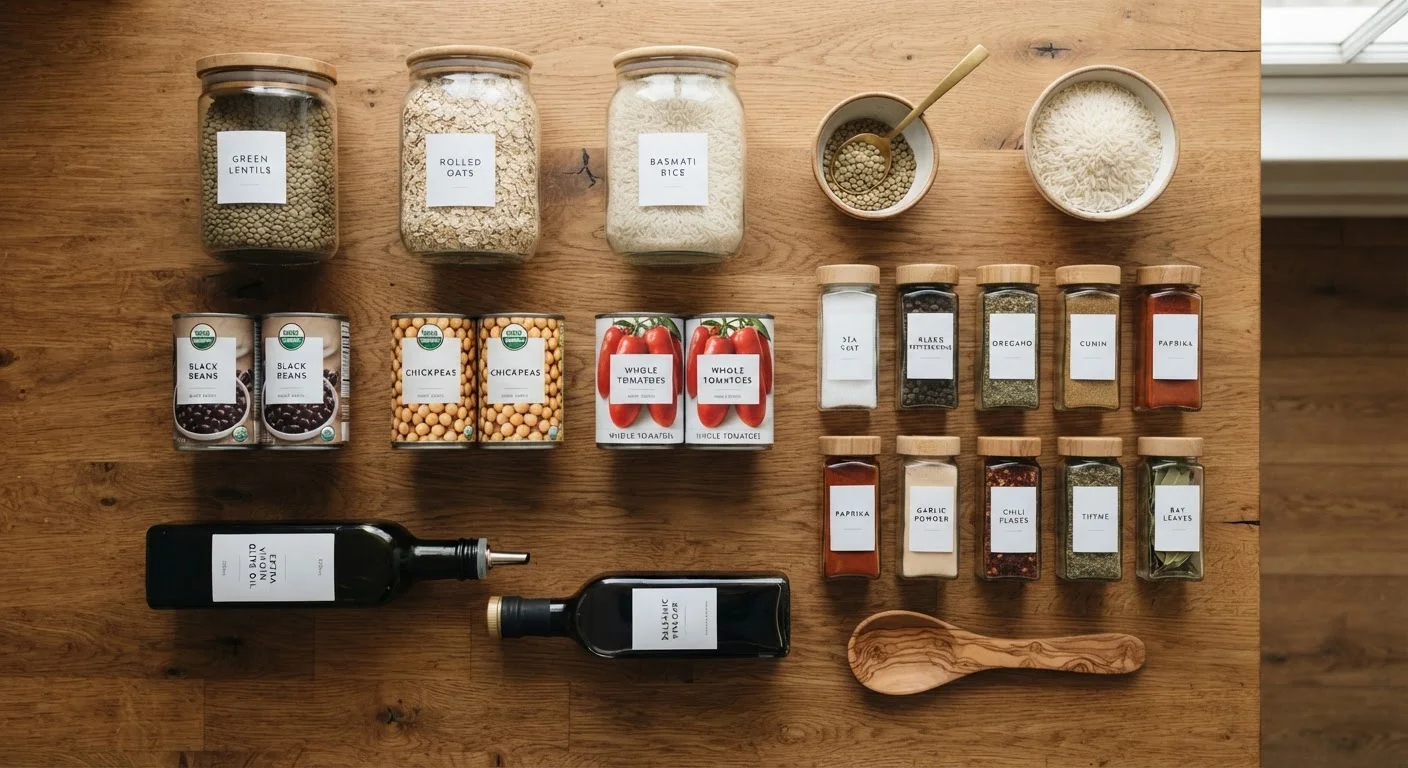
If you want to build a pantry that supports this process, pantry staples that stretch your grocery dollar covers the most versatile, affordable options to keep on hand.
Organizing and executing the shopping trip
Group your list by store section: produce, dairy, proteins, frozen, dry goods. This reduces how much time you spend in the store, which matters because longer trips correlate with higher unplanned spending. Move through the perimeter first, then work inward through aisles you actually need.
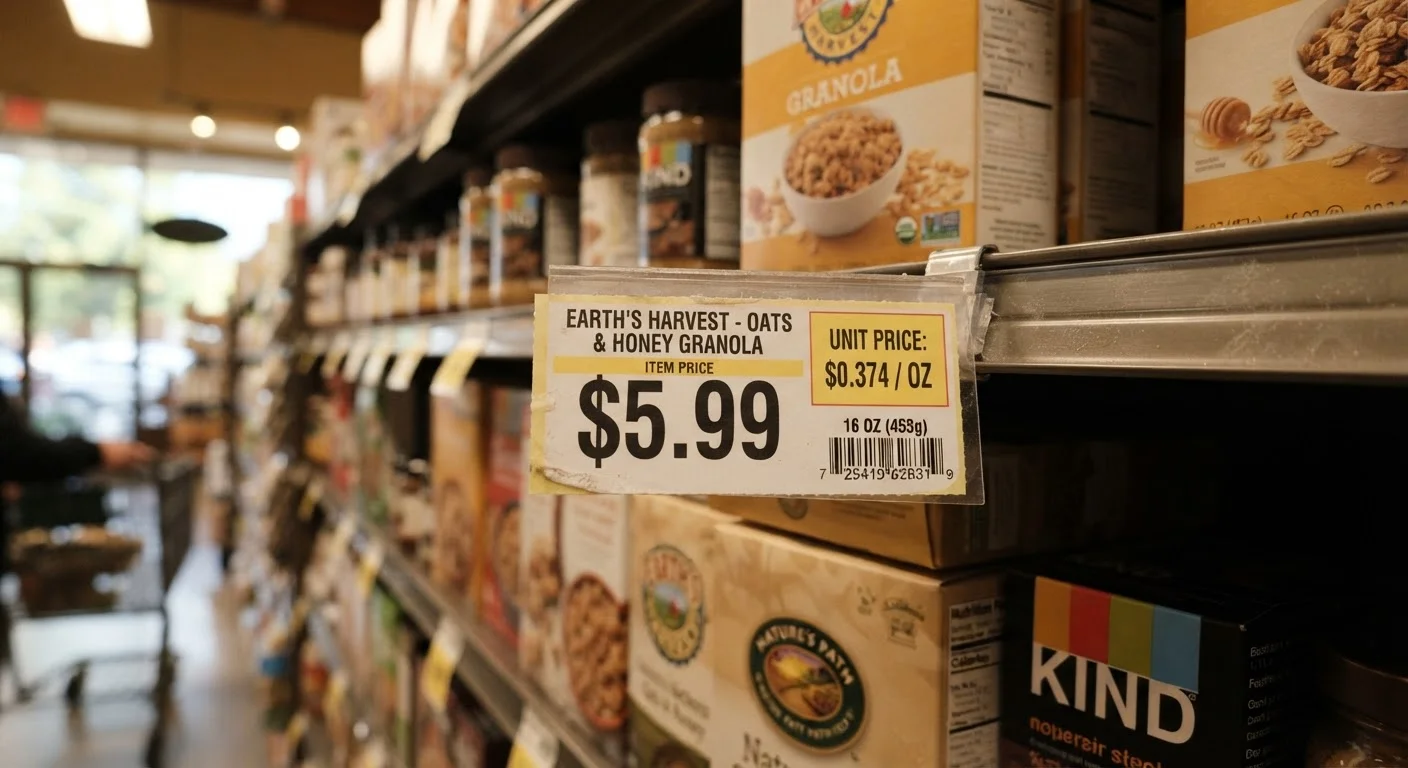
At the shelf, use unit pricing to compare sizes and formats honestly. A larger package is not always cheaper per ounce, and a sale price is not always a deal if you will not use the full quantity. How unit pricing actually works explains how to read those shelf tags accurately.
When choosing between store brands and name brands, the gap in quality is smaller than most shoppers expect for staple categories. The real difference between store brands and name brands breaks down where swaps make sense.
For produce specifically, the form you buy, whether fresh, frozen, or canned, affects both cost and how long it stays usable. Fresh, frozen, or canned produce compares the tradeoffs.
Post-shop storage and the weekly waste review
How you store food after a trip determines how much of your grocery budget you actually eat. Proteins that will not be used within two days go straight to the freezer. Leafy greens stored with a paper towel inside the bag stay fresh several days longer. Leftovers in clear containers at eye level in the refrigerator get eaten; leftovers pushed to the back do not.
At the end of each week, before you start planning the next one, spend five minutes identifying what you threw away. Note the item and the rough quantity. Over three to four weeks, patterns appear. A family that consistently discards half a bunch of cilantro should either buy less or shift to dried cilantro for cooked dishes. This review loop is what turns a routine into a system that improves.
If batch cooking fits your schedule, it extends the usefulness of ingredients bought in larger quantities. Batch cooking on Sundays gives an honest look at what the method requires and where it breaks down.