What actually separates store brands from name brands
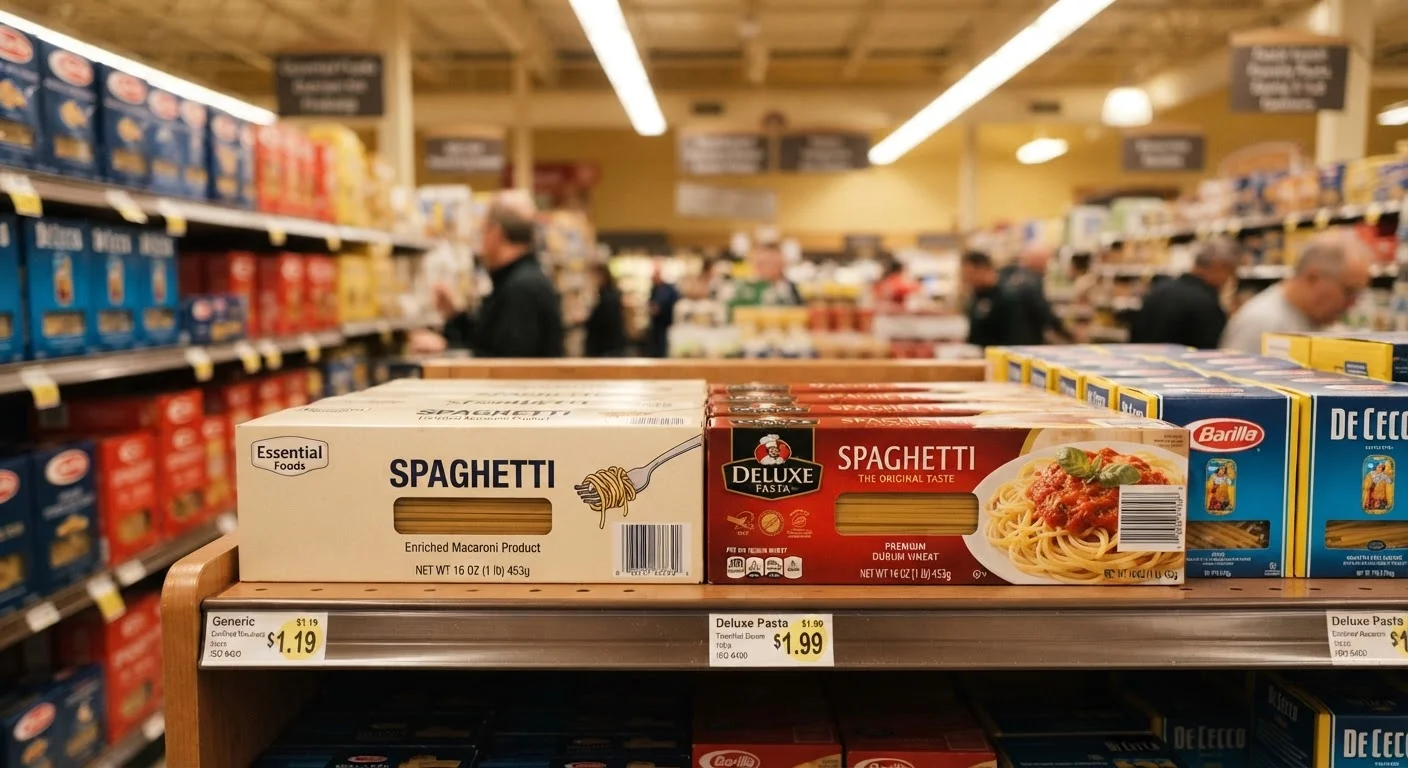
Store brands, also called private-label or generic products, are sold under the retailer's own label rather than a manufacturer's national brand. The widespread belief is that they are inferior copies. In practice, the relationship is more complicated.
Many national manufacturers produce both their branded product and a nearly identical private-label version on the same production line. A 2019 analysis by researchers at the University of Chicago found that about 65% of private-label products from warehouse and grocery retailers came from the same manufacturers as the branded versions sitting next to them on shelves. The formulas are sometimes identical; in other cases, the retailer negotiates a slightly different recipe or specification to hit a lower price point.
The practical difference between the two often comes down to marketing spend. Name brands invest heavily in advertising, packaging, and brand recognition. That cost is built into the retail price. Store brands carry no equivalent overhead, which is a large part of why they typically cost 20% to 30% less, according to FMI (the Food Industry Association) consumer surveys.
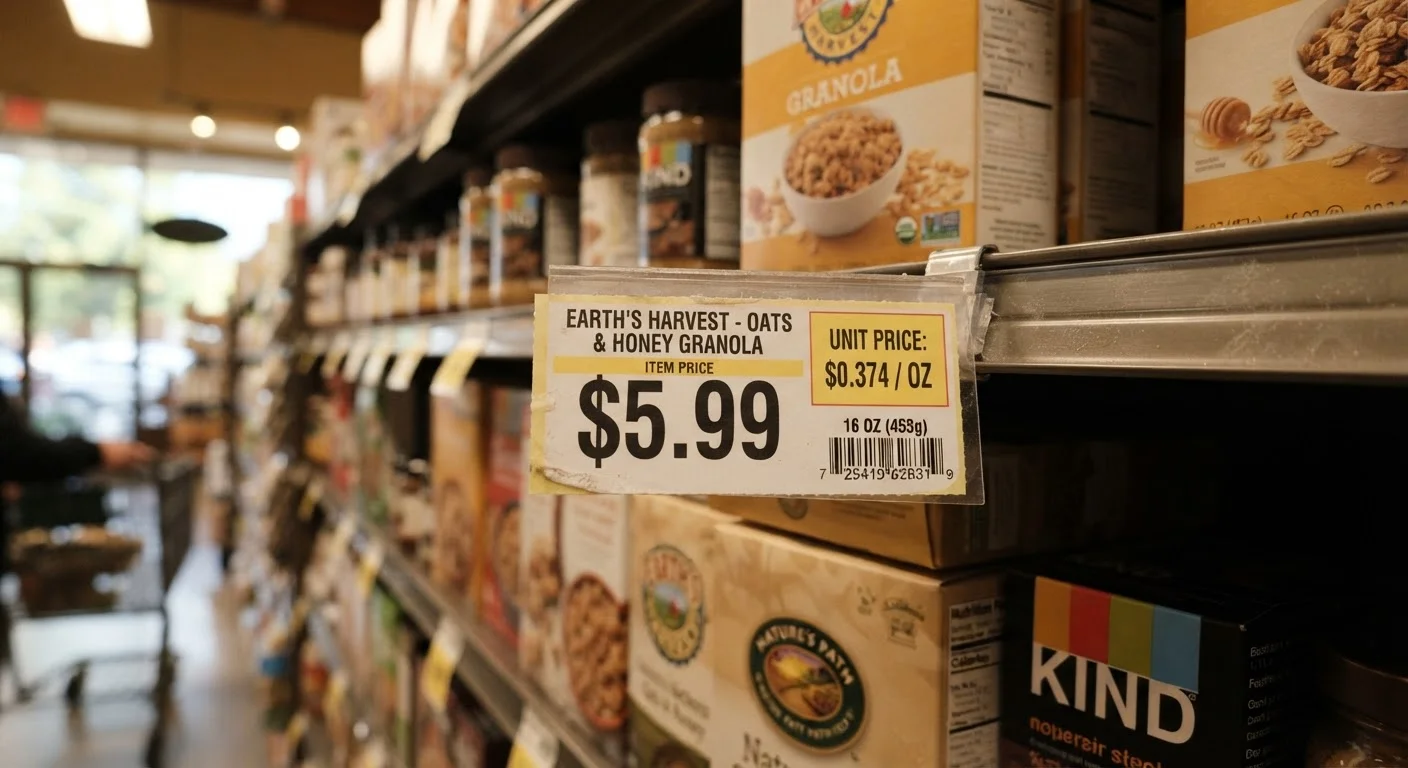
Understanding unit pricing gives you a straightforward method for comparing actual value per ounce or per serving, which is more useful than comparing sticker prices on different package sizes.
Common myths and what the evidence says
Several stubborn misconceptions shape how shoppers approach the store-brand decision. The myth-and-fact breakdowns below address the ones that affect families most directly.
Myth
Store-brand products are made in lower-quality facilities with cheaper ingredients.
Fact
A large share of store-brand products come from the same manufacturers and facilities as name brands, often on the same production lines.
Retailers contract with established food manufacturers to produce private-label goods. The manufacturer benefits from running lines at full capacity; the retailer gets a product to sell under its own label. University of Chicago research published in the American Economic Review estimated that roughly two-thirds of private-label grocery items are co-manufactured alongside branded versions. The ingredient specification may differ slightly to meet a target price, but the facility and food-safety standards are the same.
Myth
The nutrition in a store-brand product is always lower than its name-brand counterpart.
Fact
Nutrition profiles are frequently identical, and any differences are visible on the label if you look.
Federal labeling law requires that all packaged foods carry a Nutrition Facts panel with standardized serving sizes for a given product category. Comparing the two panels side by side takes about thirty seconds in the aisle. For regulated categories like breakfast cereals, canned goods, and dairy, nutrient levels are often the same. Where differences exist, they show up plainly in the label data, so you do not need to guess.
Myth
Generic over-the-counter medications are weaker or less reliable than name-brand versions.
Fact
FDA regulations require that generic OTC drugs contain the same active ingredient at the same strength as their name-brand equivalents.
The FDA's monograph system governs OTC drugs. Any product sold as, for example, a 200mg ibuprofen tablet must contain 200mg of ibuprofen regardless of the label on the box. Inactive ingredients (binders, coatings, fillers) can vary, which occasionally matters for people with specific allergies or sensitivities. For most households, the active ingredient equivalence holds and the price difference is meaningful over a year's worth of medicine cabinet purchases.
Myth
If a store brand costs less, the retailer is cutting corners somewhere in production.
Fact
The price difference largely reflects the absence of national advertising costs, not a reduction in manufacturing quality.
Name brands allocate substantial budgets to television, digital, and in-store promotions. Those costs are recovered through higher retail prices. Store brands carry no equivalent marketing expense, and the retailer's margin on private-label goods is often higher despite the lower shelf price. The cost structure is different; the production standard is frequently the same. FMI consumer research consistently finds that private-label dollar share grows during periods of price sensitivity, and most buyers who try store brands report satisfaction levels comparable to name brands.
Myth
Store brands are only worth buying for boring staples, not for anything that requires flavor.
Fact
Store brands perform well across many flavor-dependent categories, though some highly seasoned or specialty products do show real recipe differences.
Canned tomatoes, coconut milk, olive oil, and frozen fruit are examples of items where store-brand flavor is consistently close to name-brand versions because the ingredient is largely the raw commodity itself. The categories where formulation differences produce noticeable taste distinctions tend to be sauces, condiments, and spice blends where the brand's proprietary recipe is the point of differentiation. Tasting both in a low-stakes dish is a practical way to find out rather than assuming one way or the other.
Where store brands deliver equal value and where they fall short
Category matters. For pantry staples like canned tomatoes, dried beans, flour, sugar, oats, and frozen vegetables, ingredient panels are nearly always identical to name brands. Nutritional content is the same, and cooking performance is the same. These are the highest-confidence swaps.
Dairy products such as butter, shredded cheese, and sour cream are also strong candidates. USDA grading standards apply equally to all producers, so a store-brand block of cheddar meets the same federal quality benchmarks as a nationally branded one.
Over-the-counter medications and supplements are a specific case worth understanding. The FDA requires that store-brand (generic) OTC products contain the same active ingredient at the same dosage as their name-brand equivalents. For pain relievers, antacids, and allergy medications, the store brand is functionally identical by law.
The categories where quality differences appear more often include fresh bread (which varies by each retailer's bakery supplier), baby formula (where parents should read labels carefully and consult a pediatrician before switching), and some refrigerated doughs where texture can differ because of small recipe changes. Highly seasoned or spiced products like hot sauces, mustards, and spice blends are also areas where brand-specific formulations produce genuine taste differences. These are judgment calls based on your family's preferences.
For a broader approach to making these decisions consistently, a structured weekly grocery routine can help you track which swaps worked and adjust over time.
How to evaluate a store-brand product in the store
The ingredient list and nutrition facts panel are your primary tools. Hold the store-brand product next to the name brand and compare ingredients in order. If the first three to five ingredients are the same, the products are likely very close in formulation. Pay attention to the order of added sugars, oils, or salt, since small shifts in position can reflect real differences in proportion.
Check the weight or volume, not just the price. A store-brand container may look similar but hold fewer ounces. This is where unit pricing on the shelf tag (price per ounce, per pound, or per count) gives you an accurate comparison.
Expiration or best-by dates are worth a look on perishable products. Some retailers rotate private-label stock less aggressively than major brands that have dedicated shelf-management teams.
Finally, taste-testing is legitimate. Buy one of each for a recipe your family makes regularly. If no one notices the difference, you have a confirmed swap that saves money every time you shop. If the texture or flavor matters to the dish, keep the brand that works.