Why $150 a week is a realistic target
The USDA publishes monthly food plan cost estimates for American households at four spending tiers. For a family of four with two school-age children, the "low-cost" plan has historically landed in the range that $150 per week can cover, though exact figures shift with inflation and regional price differences. That context matters because $150 is not an arbitrary number: it sits at a level where real nutritional variety is possible without requiring unusual discipline or access to specialty stores.
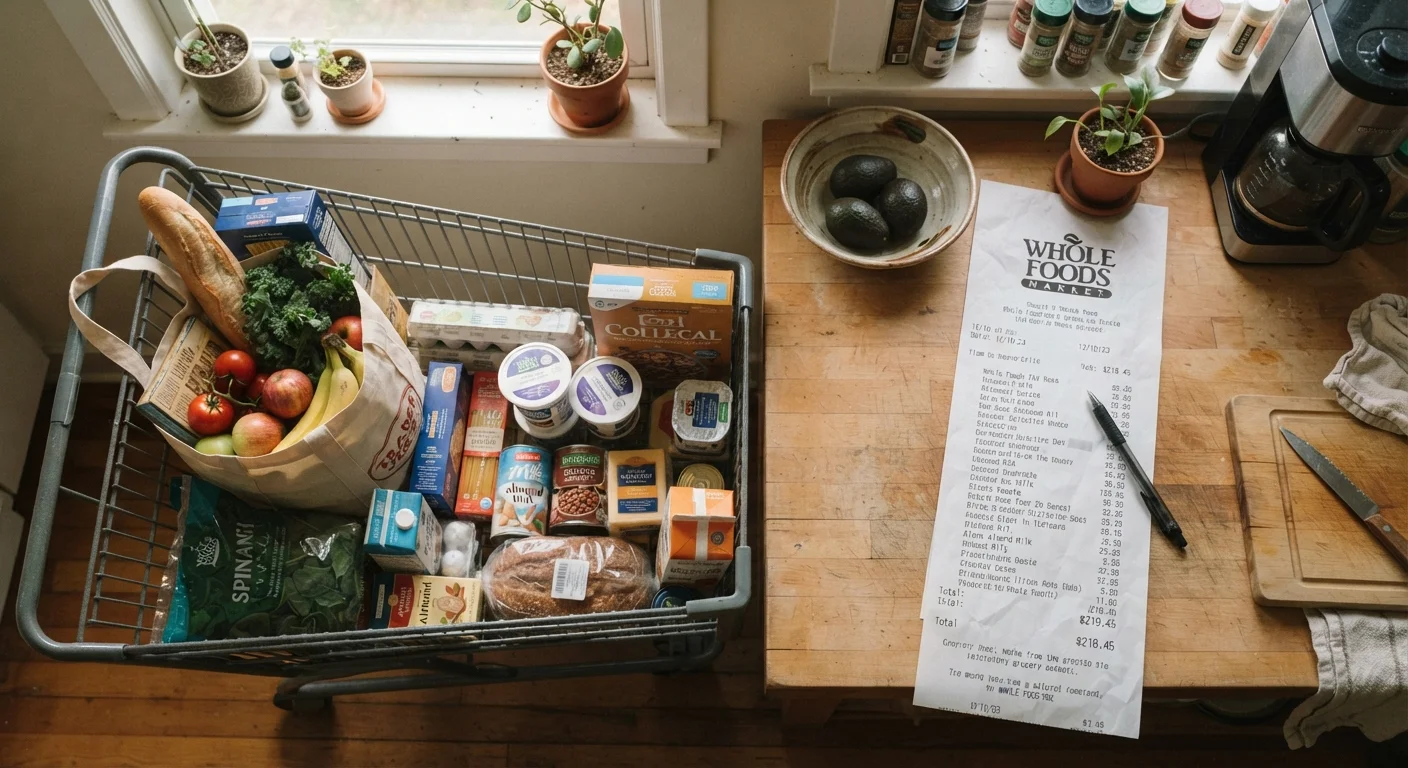
The main levers are protein choices, produce strategy, and how often the family eats outside the home. Families who spend well over $150 weekly often find, after reviewing receipts, that frequent restaurant meals, pre-cut or pre-seasoned convenience items, and unplanned shopping trips account for most of the gap. See why your grocery run costs more than it should for a closer look at those habits.
Getting to $150 consistently does not require eating the same meals every week. It requires knowing which categories in your cart are driving cost and making deliberate trade-offs in those areas.
What you need before you start
Before adjusting your grocery habits, gather two or three weeks of actual receipts or bank statements so you have a clear baseline. Guessing your current spending almost always produces an undercount. Once you have real numbers, the gap between where you are and $150 becomes concrete rather than intimidating.
What you will need
If you are new to structured meal planning, this guide to meal planning from scratch covers the core weekly habits before you start optimizing for cost.
Step-by-step: building your $150 week
Set a per-meal spending ceiling
Divide $150 by 21 meals (three meals a day, seven days). That gives roughly $7.14 per meal for the whole family, or about $1.78 per person. Some meals will cost more and others far less; the goal is to average out, not to hit the figure exactly every time. Breakfasts (oatmeal, eggs, toast) and lunches (soups, grain bowls, leftovers) should come in well below $7 to create room for dinners that may cost more.
Plan seven dinners before you shop
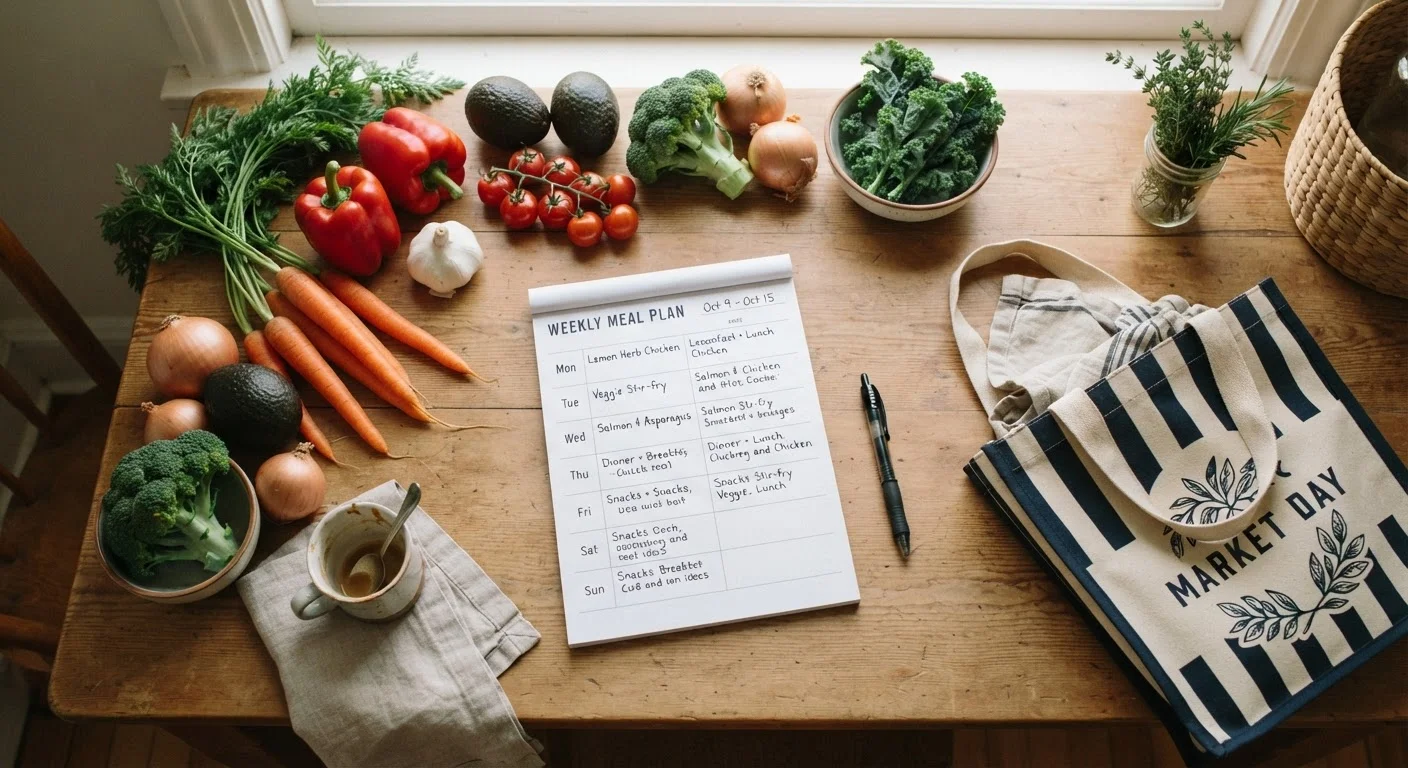
Write out seven dinner ideas before opening a store app or stepping into a store. Assign two of those dinners to be "crossover" meals, meaning a recipe that uses the same primary ingredient as another dinner that week. For example, a whole roasted chicken on Monday becomes chicken tacos on Wednesday. This reduces the number of distinct proteins you need to buy and lowers overall cost without requiring repeated meals.
Write a specific, categorized list
A vague list leads to in-store decisions that inflate cost. Organize your list by store section: produce, dairy, proteins, dry goods, frozen, and canned. For each item, note the quantity the meal plan requires. If a recipe calls for one can of chickpeas and you have a partial can at home, write that down before shopping so you do not double-buy.
Compare unit prices, not package prices
Store shelf tags in the US typically display a unit price (cost per ounce, pound, or count) alongside the item price. Use this number when comparing sizes or brands. A larger package is not always cheaper per unit, and store-label products frequently match the quality of national brands at a lower unit price for staple items like flour, canned vegetables, and dried pasta.
Set a one-week review after your first planned shop
After the first full week on the plan, total your receipts and note which meals came in under target and which pushed over. Adjust the next week's plan based on what you actually spent rather than what you expected. Most families need two to three cycles before the process feels automatic. Treat the first week as a calibration, not a pass or fail.
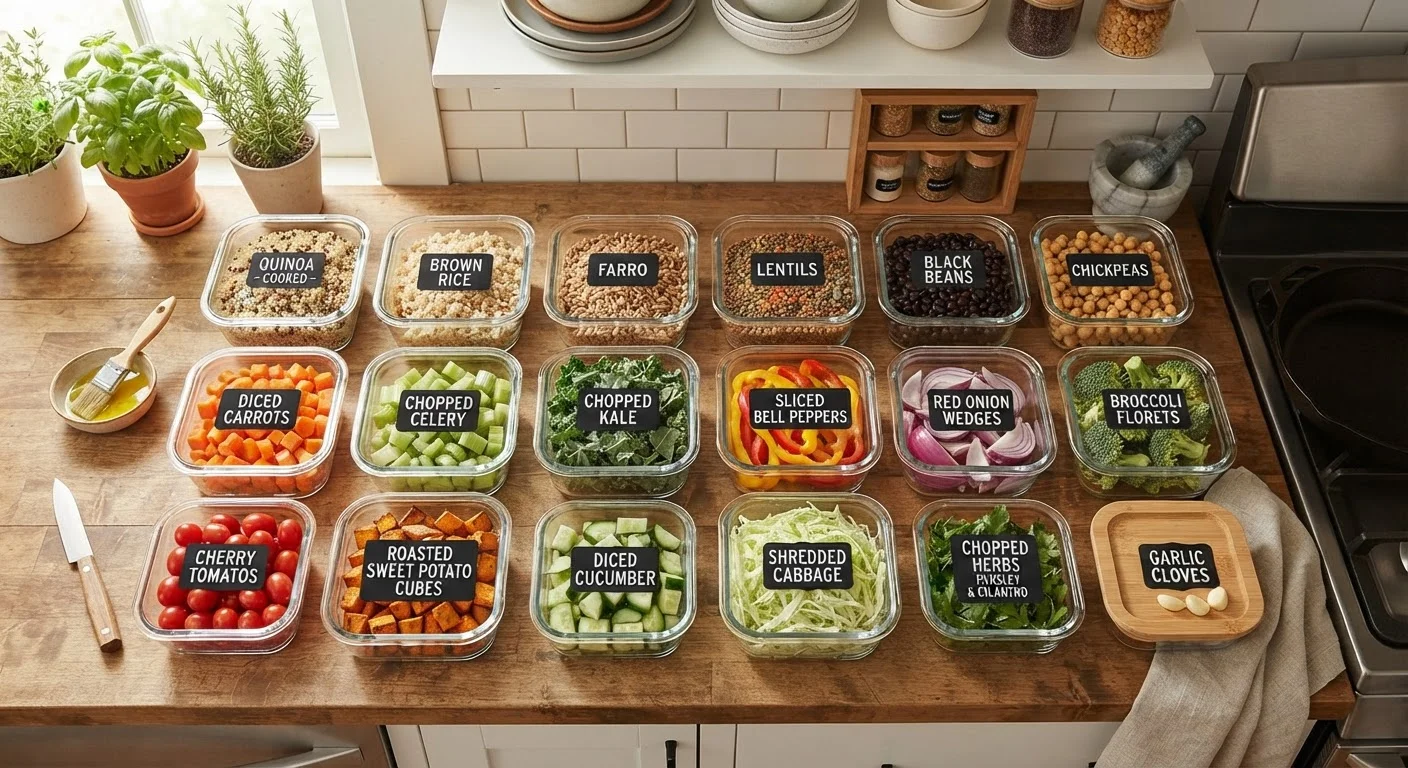
Once the routine is in place, batch cooking on Sundays compounds the savings by keeping prepared food available when weeknight energy runs low.
Stocking a pantry that does the heavy lifting
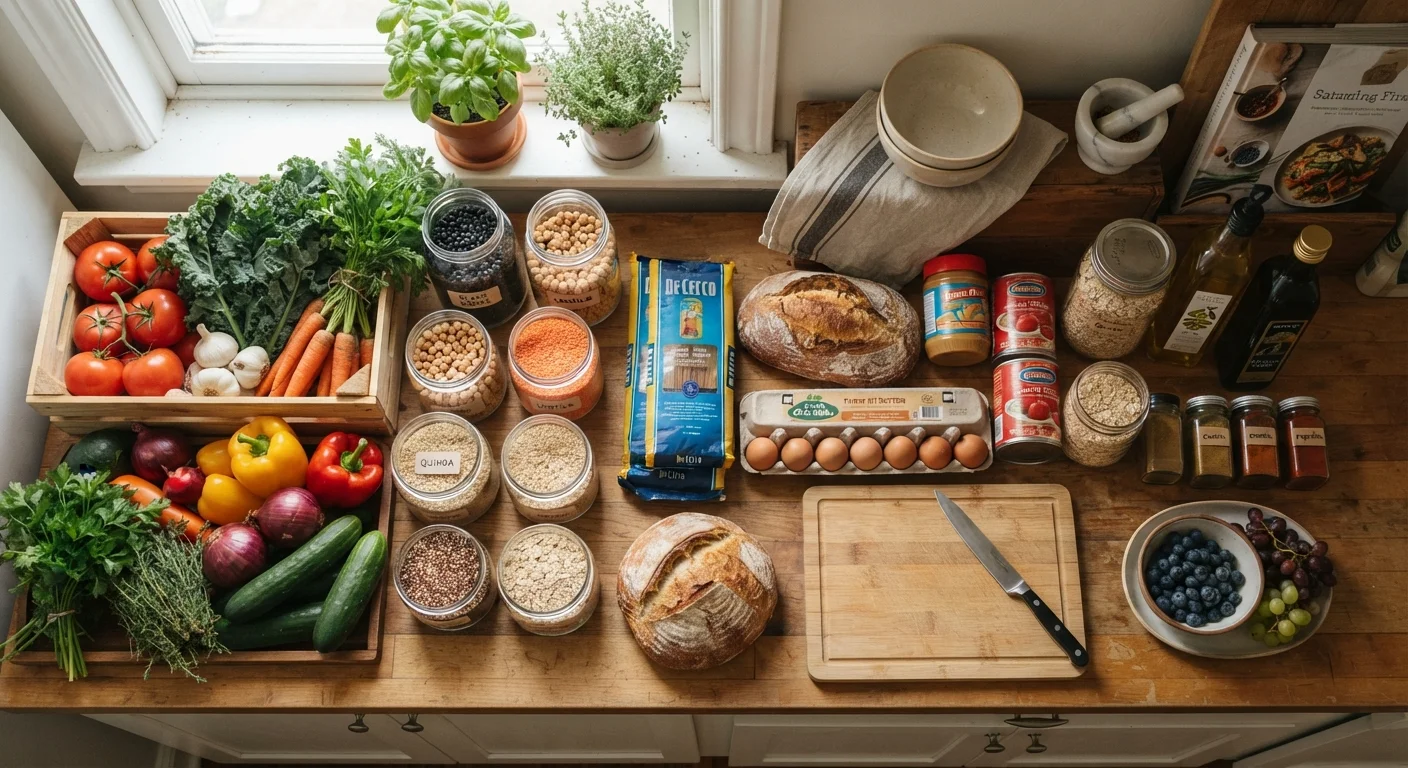
A well-stocked pantry changes the math on weekly shopping. When dried lentils, canned tomatoes, oats, rice, and olive oil are already on the shelf, a weekly shop becomes a matter of adding fresh protein and produce rather than rebuilding from scratch each time. That cuts the average spend per trip because you are buying fewer items at full price on short notice.
Pantry staples that stretch your grocery dollar goes deeper on which specific items deliver the most flexibility per dollar. The short list: dried beans and lentils, whole grains, canned fish, eggs, frozen vegetables, and a neutral cooking oil. These ingredients form the base of dozens of meals and have long shelf lives that reduce waste.
Frozen vegetables deserve particular attention. They are picked and frozen at peak ripeness, so nutritional content is comparable to fresh, and the price per serving is often lower. Swapping fresh broccoli for frozen on non-presentation nights is a straightforward cost cut with no meaningful quality loss.
Common points where budgets break down
Most families hit the $150 ceiling not in a single large purchase but through several small friction points. The most common: buying bottled beverages (water, juice, soda) instead of making drinks at home; purchasing single-serve snack packaging instead of buying in larger quantities and portioning; and defaulting to boneless skinless chicken breast as the household protein when bone-in thighs or drumsticks cost considerably less per pound and work well in the same recipes.
Produce waste is another quiet drain. The USDA Economic Research Service has found that American households discard a meaningful share of the produce they buy. Buying only what the meal plan calls for, and having a clear use for any remainder by the end of the week, is more effective than buying in bulk hoping to use everything. A consistent grocery routine that includes a mid-week check on what needs to be used first can cut this loss substantially.