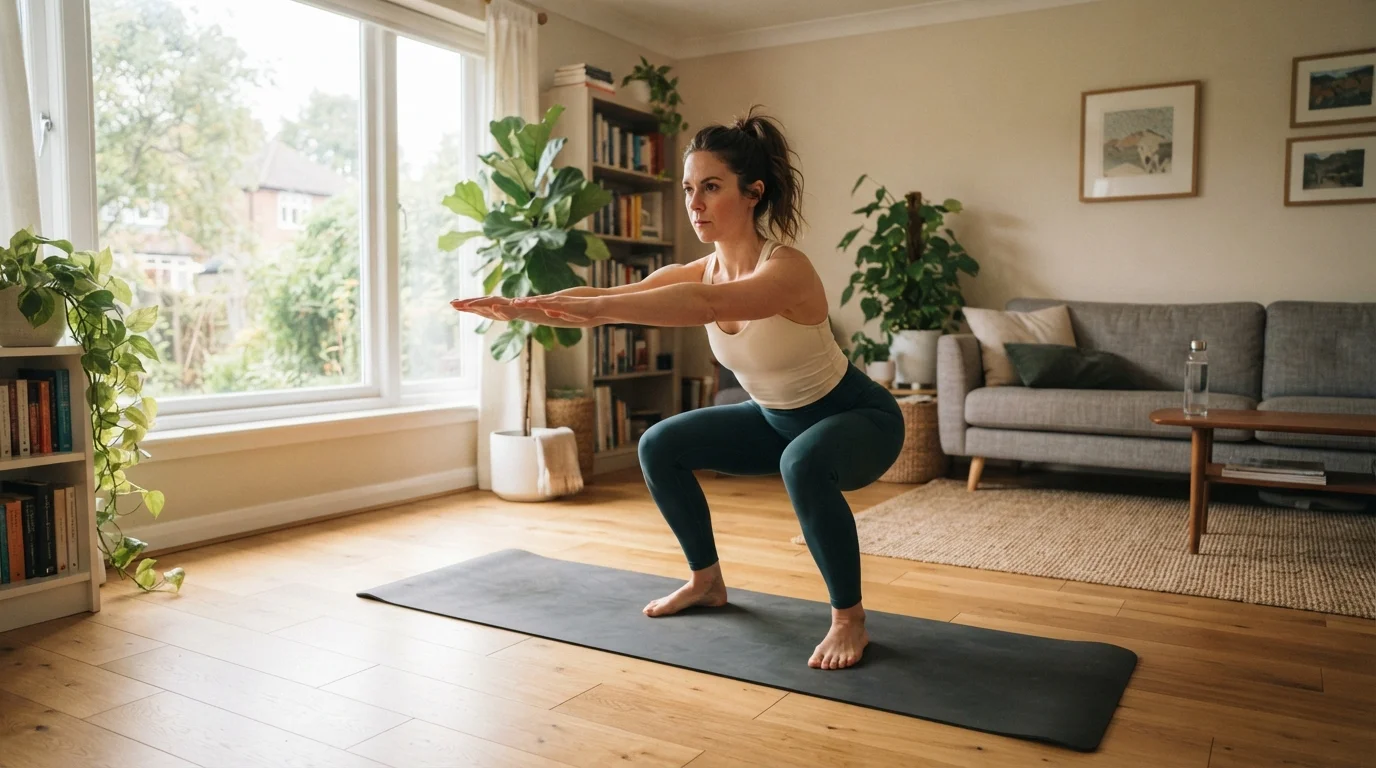
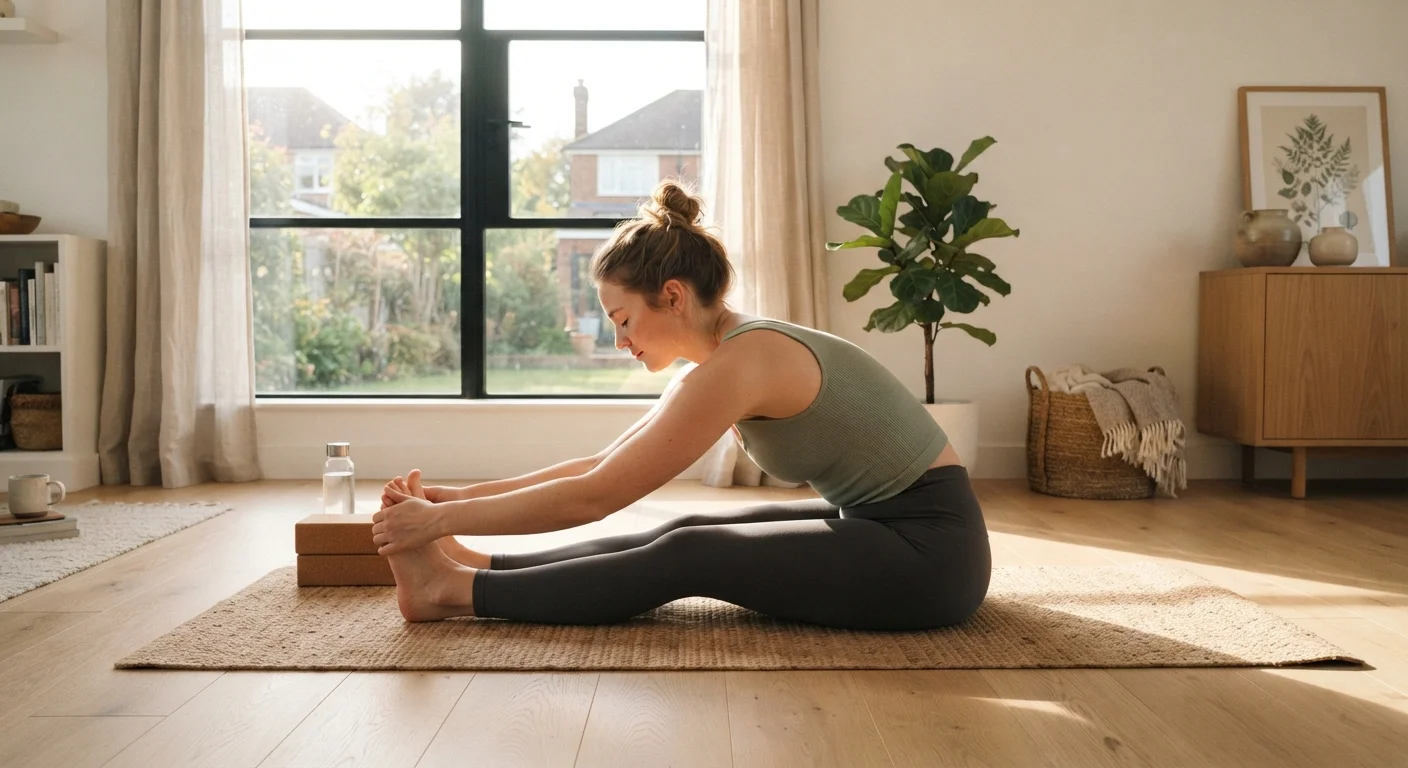
What actually changes when you stretch daily
Consistent stretching produces measurable changes in how far a joint can move through its range of motion. Research published in journals such as the Journal of Sports Science and Medicine has shown that holding a stretch for 15 to 60 seconds several times per week increases muscle length and joint mobility over weeks to months. The mechanism involves both the mechanical properties of the muscle-tendon unit and changes in the nervous system's tolerance to the stretch sensation.
Muscles that are held in shortened positions for hours (as happens during prolonged sitting) become less pliable. A brief daily stretching routine can offset some of this stiffness, which many people notice as improved ease of movement in the morning or after long car rides. This effect is real and reproducible. It does not require expensive equipment or a gym membership, which makes it one of the most accessible habits a family can adopt. See how it pairs with other free movement habits in walking for cardiovascular health.
The genuine benefits: what the evidence supports
Improves joint range of motion over time
Regular stretching gradually increases how far a joint moves, supported by consistent findings in sports science literature. This benefit accumulates over weeks of practice.
Reduces everyday muscle stiffness
People who sit for long periods often notice that daily stretching eases morning tightness and post-sitting discomfort in the hips and lower back.
Supports relaxation at low cost
Slow stretching can activate the parasympathetic nervous system, offering a calming effect. No equipment or membership is needed.
Accessible for most ages and fitness levels
Basic stretches can be performed on a floor or chair and adapted for children, adults, and older family members with varying mobility.
Pairs well with other movement habits
Stretching complements strength training and aerobic activity by keeping muscles pliable, which can support better form in other exercises.
Beyond range of motion, regular stretching is associated with modest reductions in resting muscle tension and reports of lower-back discomfort in people who stretch consistently. The American College of Sports Medicine (ACSM) includes flexibility training as one component of a well-rounded physical activity program. Stress relief is another reported benefit: slow, deliberate stretching activates the parasympathetic nervous system, which can produce a calming effect. This makes a short stretching routine a practical, no-cost tool for winding down at the end of the day.
The real limits: what stretching cannot do
Does not reliably prevent exercise injuries
Cochrane Collaboration evidence found little consistent injury-prevention effect from pre-exercise stretching, contradicting a widely held assumption.
Cannot prevent delayed-onset muscle soreness
Stretching before or after exercise does not meaningfully reduce the muscle ache that follows unfamiliar or intense physical effort.
Static stretching may briefly reduce power output
Holding static stretches immediately before activities like sprinting can temporarily lower force production, making dynamic warm-ups a better pre-activity choice.
Does not build strength or cardiovascular fitness
Stretching alone does not meet the ACSM's recommendations for muscle-strengthening or aerobic activity, so it cannot replace those components.
Overstretching can cause strain
Pushing a stretch past mild tension, especially in cold muscles, can injure the muscle-tendon unit. Pain during a stretch is a sign to ease off immediately.
A common misconception is that stretching before exercise prevents injuries. The evidence does not consistently support this. A systematic review by the Cochrane Collaboration found that pre-exercise stretching had little effect on injury rates in military recruits. Delayed-onset muscle soreness (DOMS), the ache felt 24 to 48 hours after unfamiliar exercise, is also not reliably prevented by stretching.
Static stretching performed immediately before a power-dependent activity (such as sprinting or jumping) can temporarily reduce force output. Dynamic warm-up movements are better suited to that context. Stretching also does not build muscle, improve cardiovascular fitness, or correct structural problems in joints. Families who stretch regularly and nothing else are missing the strength and aerobic components the ACSM recommends for overall health. Bodyweight training is one low-cost way to fill that gap.
How to stretch safely and effectively
Effective stretching does not require pushing to the point of pain. A mild pulling sensation is normal; sharp or joint pain is a signal to stop. Static stretches (held positions) work well for general flexibility when performed after a workout or as a standalone routine when muscles are already warm. Holding each position for 20 to 30 seconds and repeating two to three times per muscle group is consistent with ACSM guidelines.
Children and older adults can both benefit from stretching, but with different considerations. Older adults should be especially careful around osteoporotic areas of the spine, and anyone with a specific medical condition should consult a healthcare provider before starting a new routine. Skipping a warm-up before any exercise, including stretching cold muscles aggressively, is one of the more common home-workout errors. Common home workout pitfalls covers this and other avoidable mistakes.
A note on special populations
Older adults with osteoporosis should avoid aggressive forward flexion of the spine during stretching. Pregnant individuals, children, and anyone managing a chronic musculoskeletal condition should get personalized guidance from a healthcare provider or certified physical therapist before starting or intensifying a stretching routine.
This article is for general informational purposes only and is not a substitute for professional medical advice. If you have an injury, chronic condition, or specific health concern, consult a qualified healthcare provider before changing your exercise routine.