Why skipping the gym membership makes sense for families
The average gym membership in the United States costs between $40 and $60 per month per person. For a family of four, that adds up to a significant annual expense before a single workout happens. The good news is that the health benefits families seek from a gym, improved cardiovascular fitness, stronger muscles, better sleep, and lower stress, do not require that investment.
The CDC's Physical Activity Guidelines recommend at least 150 minutes of moderate-intensity aerobic activity per week for adults, plus muscle-strengthening on two or more days. Children and adolescents need about 60 minutes of physical activity daily. None of those targets require a treadmill or a weight machine to meet.
Research consistently shows that adherence to an exercise routine depends more on convenience, enjoyment, and social support than on facility access. A family that walks together after dinner four nights a week may accumulate more genuine activity than one that holds an unused gym membership. For families weighing their options, our article on bodyweight training vs. equipment-based exercise covers how the two approaches compare on real fitness outcomes.
Using parks and outdoor spaces effectively
Most American communities have parks, trails, schoolyards, or open green space within a short distance. These venues support a wide range of activities, from casual walking to structured interval training, at no cost.
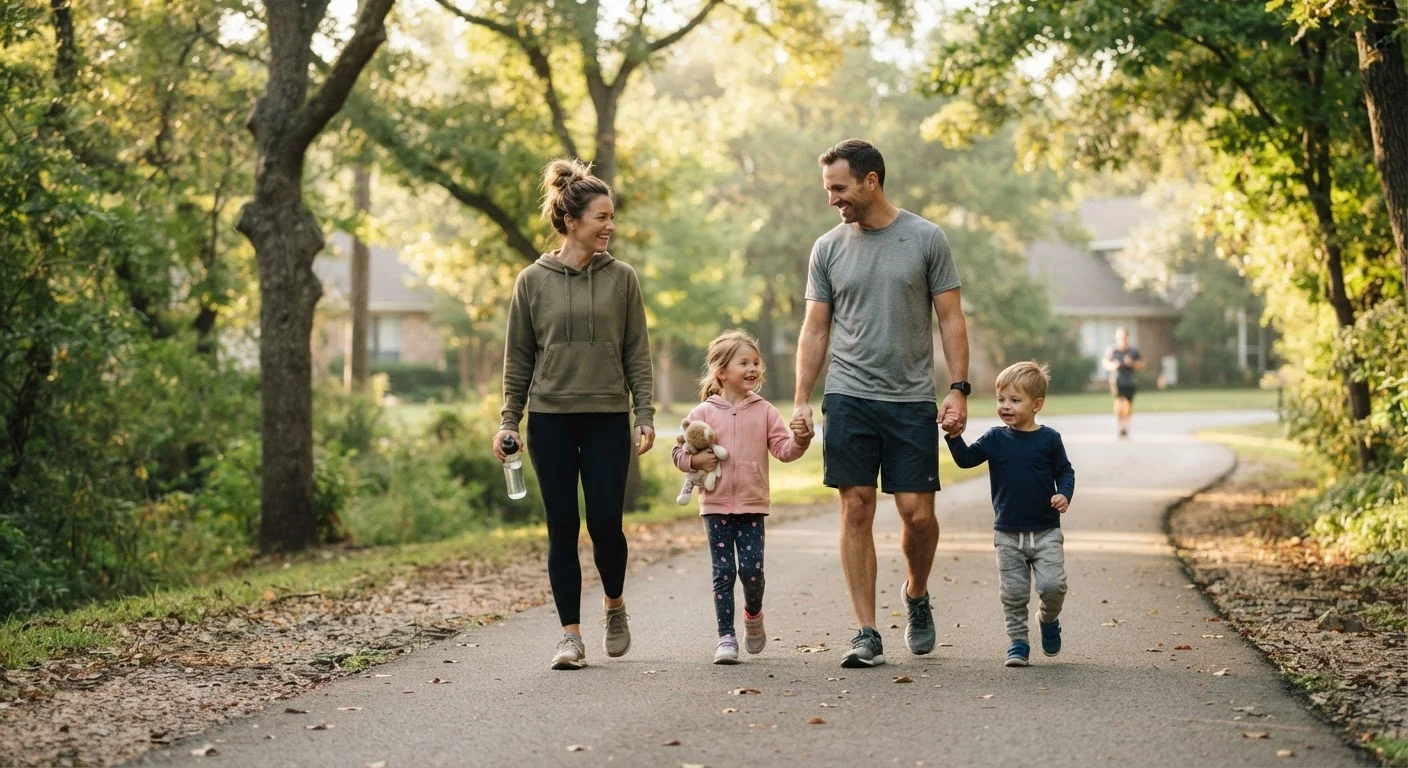
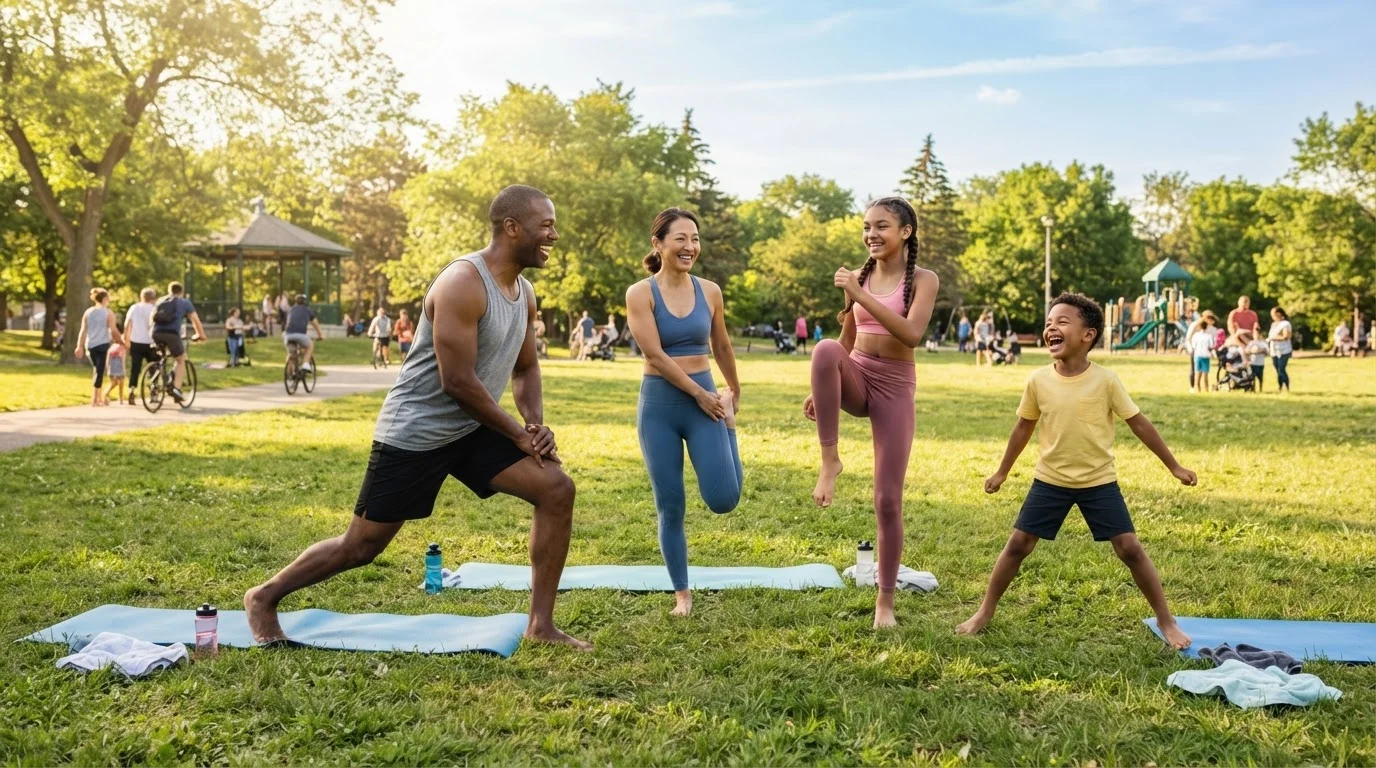
A simple park workout can include brisk walking or jogging on paved paths, bodyweight circuits using benches and open grass, playground-based movements such as pull-ups on monkey bars and step-ups on benches, and games like tag or relay races that get children genuinely winded. Walking is one of the most accessible tools families have, and the science behind it is worth understanding. Our piece on walking as a workout reviews what the research actually says about its cardiovascular benefits.
Planning park visits the same way you would schedule any appointment increases follow-through. A Saturday morning trail walk, a Tuesday evening playground session, and a Sunday bike ride around the neighborhood together form a genuine weekly structure without any membership required.
Treat your park visit as a circuit: pick four to six stations (bench, open grass, a hill, a set of stairs) and spend two to three minutes at each one. You get variety and a structured workout without any equipment.
Circuit-style training keeps intensity up and reduces the need for planning, which lowers the barrier to starting and makes outdoor sessions more effective.
Schedule activity on the calendar as a recurring appointment, not a flexible intention. Families that block specific times are significantly more consistent than those who plan to 'fit it in.'
Behavioral research on habit formation shows that implementation intentions (deciding when and where in advance) substantially improve follow-through rates.
Building a home fitness routine with no equipment
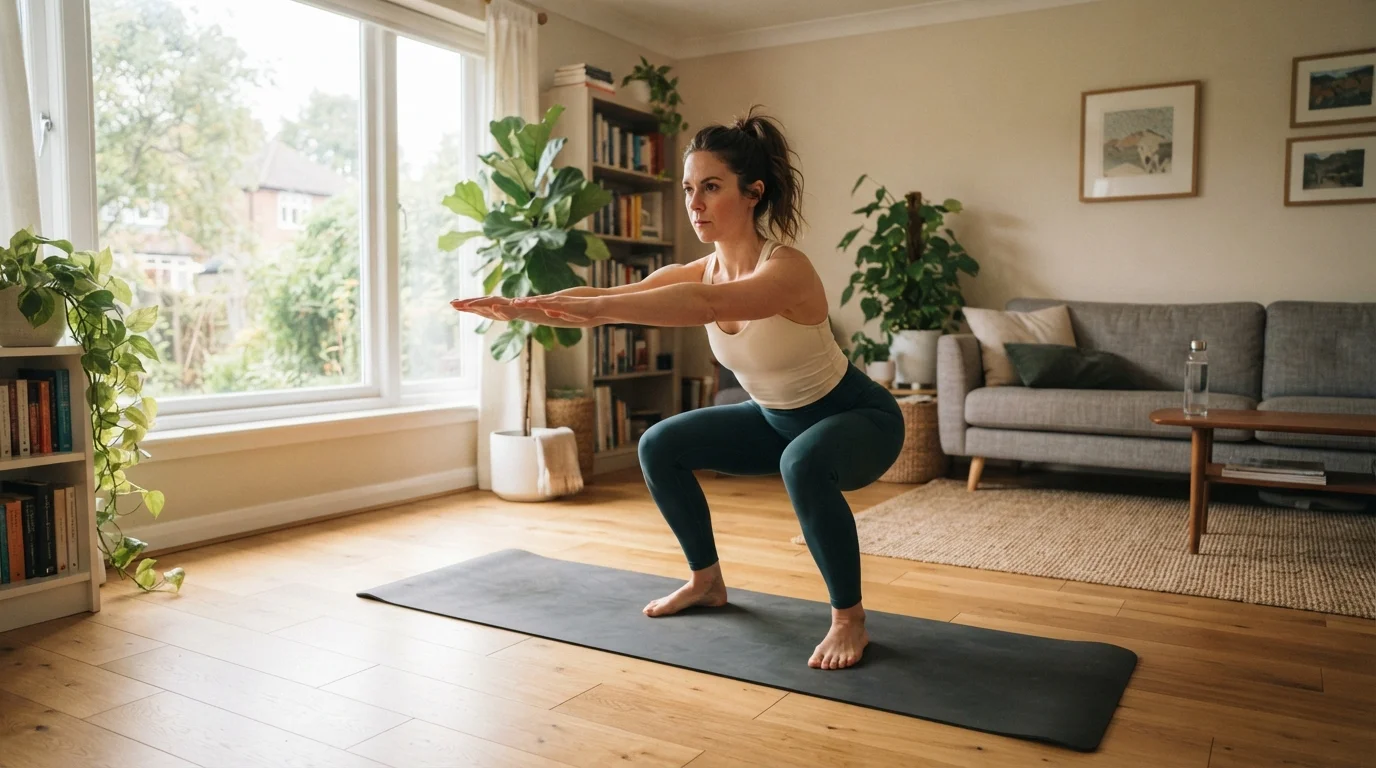
Living room floors, staircases, and backyard grass are all legitimate workout surfaces. A solid bodyweight routine for adults can include squats, lunges, push-ups, planks, glute bridges, and step-ups on a sturdy chair. Children can join modified versions of the same movements, turning exercise into shared time rather than a solo obligation.
A practical structure for a 20-minute home session: spend three to five minutes warming up with light marching in place and arm circles, then alternate between two or three exercises for the main block, and finish with a few minutes of stretching. Keeping sessions short and predictable makes them easier to sustain. For a thorough look at what tends to derail home workouts, see our guide on home workout pitfalls that slow your progress.
Free video resources through public library apps and YouTube channels make it easy to follow along with guided sessions when independent motivation runs low. No subscription is necessary for most of them.
Free and low-cost community resources
Many families overlook the fitness programming already funded by their tax dollars. Local parks and recreation departments often run free or subsidized group fitness classes, youth sports leagues, and swimming programs. Public libraries frequently offer free passes to local recreation centers through cooperative programs.
Schools sometimes open their gyms and tracks to the community during evenings and weekends. YMCAs and similar organizations use sliding-scale fee structures that can bring costs well below standard gym rates for lower-income families. Community centers in many cities post free outdoor yoga, tai chi, or group walking programs, particularly in warmer months.
For children specifically, structured activity opportunities outside of school hours matter for both health and development. Our article on getting kids moving with no-cost activity ideas lists approaches organized by age and setting.
Making activity a consistent family habit
Frequency matters more than intensity for families just starting out. Three 20-minute walks per week deliver real health benefits and are far more sustainable than an ambitious plan that collapses after two weeks. The goal is to make movement a normal part of daily life rather than a special event that requires motivation to begin.
Practical anchors help. Attaching activity to something the family already does, such as walking to a nearby destination instead of driving, adds movement without requiring extra scheduling. Keeping a simple log, even a paper calendar on the refrigerator, gives children a visible sense of progress and tends to reinforce the habit for adults too.
Nutrition and physical activity interact: families that plan their meals alongside their activity habits often find both easier to maintain. Our guide on meal planning from scratch for busy families covers the core routines that help families eat well on a realistic schedule.
Activity does not need to be perfectly uniform across every family member. The six-year-old and the parent have different capacity, and a well-designed family session lets each person work at their own level. What holds the habit together is showing up together on a regular schedule.
This article is for general informational and educational purposes only and is not a substitute for professional medical advice. Consult a qualified healthcare provider before beginning any new exercise program, particularly if you or a family member has an existing health condition.