Why free movement matters for kids
The CDC recommends that children aged 6 to 17 get at least 60 minutes of moderate to vigorous physical activity every day. That sounds ambitious, but children naturally accumulate movement in short bursts throughout the day rather than in a single continuous session. The challenge for many families is not motivation but cost: sports leagues, gym childcare, and fitness classes add up fast.
The good news is that the most developmentally appropriate activities for children require no budget at all. Running, jumping, climbing, and chasing build the same cardiovascular and musculoskeletal foundations as structured programming. For families already looking for practical low-cost ways to keep everyone active, kids' movement fits naturally into the same approach.
The list below covers seven activities that cost nothing and can fit into almost any family's daily routine.
Tag and chase games
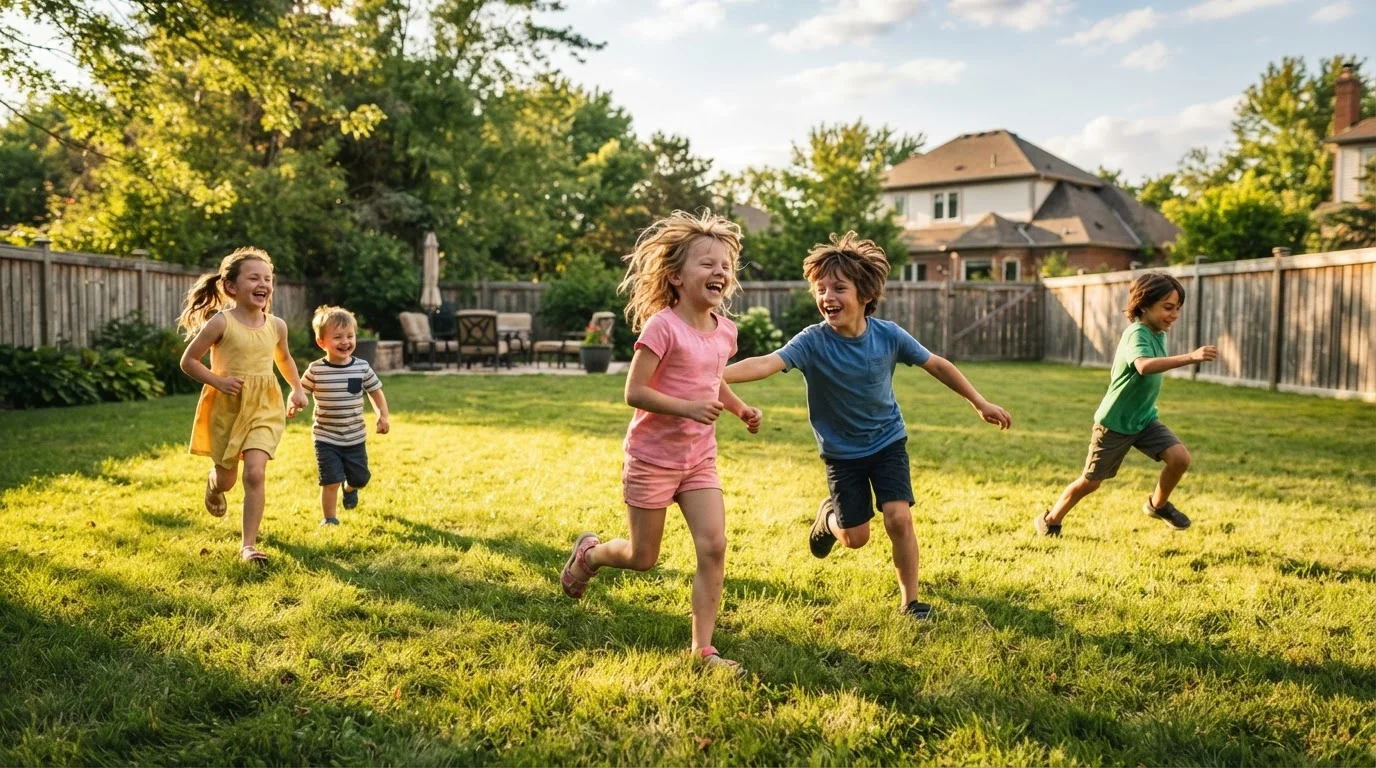
Tag requires no equipment, adapts to any group size, and naturally produces the short high-intensity bursts that the American College of Sports Medicine identifies as beneficial for children's cardiovascular development. Variations such as freeze tag, shadow tag (stepping on shadows instead of touching), and blob tag keep the game fresh across age groups. A standard backyard or sidewalk is enough space.
Tag produces short high-intensity bursts that benefit children's cardiovascular development.
Backyard obstacle courses
Using household items such as jump ropes laid flat as balance lines, garden chairs as hurdles, and hula hoops as landing zones, families can build a circuit that changes weekly. Children who help design the course tend to engage with it longer. The activity combines agility, balance, and muscular endurance without any purchased equipment.
Children who help design the obstacle course tend to stay engaged with it longer.
Public playground circuits
Most public playgrounds include climbing structures, monkey bars, and open fields. Treating a playground visit as a loose circuit, climbing for two minutes, running a lap, hanging from the bars, repeating, turns free play into structured interval training without children realizing it. The CDC notes that playground activity contributes directly to the recommended daily 60 minutes when children are moving at moderate intensity.
Playground circuits build strength and endurance while children are simply having fun.
Neighborhood scavenger hunts
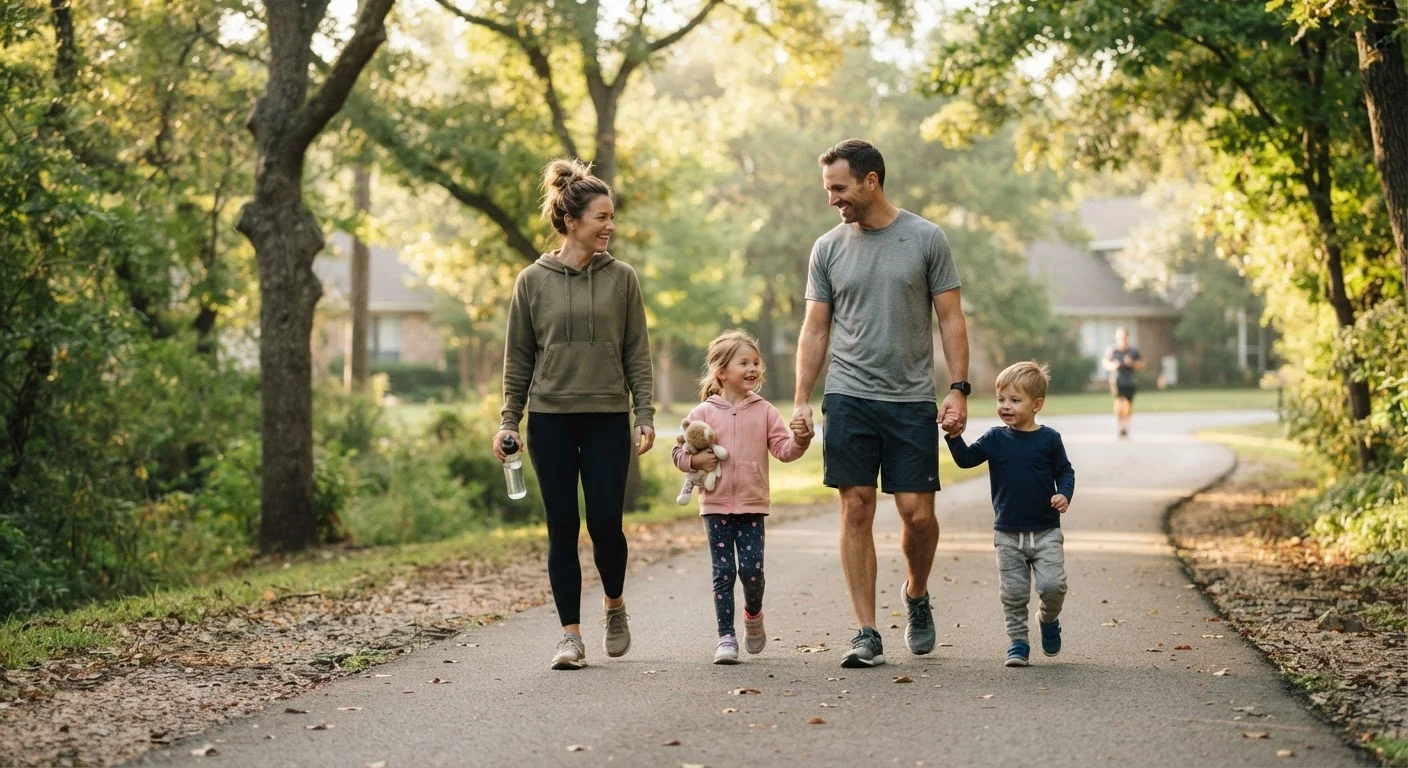
A paper list of items to spot or collect during a walk, a red door, a bird, a round rock, a yellow leaf, turns a standard neighborhood stroll into a mission. Children walk farther and faster when there is a goal attached. This approach works for a wide age range and can be adapted seasonally with no additional cost.
Children walk farther and faster when a simple goal is attached to the walk.
Jump rope and sidewalk chalk games
Jump rope develops coordination and cardiovascular fitness simultaneously. A single rope shared among siblings or neighborhood kids supports both solo jumping and group games such as double dutch. Sidewalk chalk allows families to draw hopscotch grids, number lines for jumping sequences, or target circles for throwing games. Both activities require only items many families already own or can borrow.
Jump rope develops coordination and cardiovascular fitness with no space requirements beyond a sidewalk.
School and community trail programs
Many school districts run free walking or running clubs before or after school. Local parks departments often maintain free trail maps and host no-cost nature hike programs for families. Checking a school's physical education department or a municipal parks website typically reveals options that families overlook. These programs also provide adult supervision and peer motivation that reinforce the habit.
Free school walking clubs and municipal trail programs are widely available and frequently overlooked.
Dance and movement breaks indoors
On days when outdoor activity is not possible, clearing a living room floor for a five to ten minute dance break or a follow-the-leader movement game keeps children from long unbroken sedentary stretches. Public libraries and school websites often provide free access to movement video programs for children. Even informal dancing to music from a phone counts toward daily activity totals when it raises heart rate and involves whole-body movement.
A short indoor dance break interrupts sedentary time and counts toward daily activity totals.
Making it stick
Habit formation in children depends on repetition and enjoyment far more than on novelty or equipment. A game of tag played every afternoon after school builds more lasting fitness than a single organized event. Pairing movement with something kids already look forward to, a walk with a pet, a bike ride before dinner, or a backyard obstacle course on weekends, lowers resistance considerably.
Consistency over intensity
Short, frequent movement sessions throughout the day are as effective as a single longer one for children's fitness. Aiming for three to four active periods of 15 minutes each is a practical way to reach the daily 60-minute target without restructuring the family schedule. Building movement around existing routines, after school, before dinner, on weekend mornings, makes it easier to sustain.
Walking has measurable cardiovascular benefits even at a moderate pace, which means a family walk around the block genuinely counts. For children, the social dimension of moving alongside a parent or sibling increases the chance they will repeat the behavior.
This article is for general informational purposes only and is not medical advice. Consult a qualified healthcare professional before starting any new physical activity program, particularly for children with chronic conditions or mobility concerns.