Set a realistic budget before you search
The purchase price is only one part of what a used car costs. Before you look at a single listing, add up insurance, fuel, registration, and routine maintenance. That full monthly figure should fit within your household budget without strain. Stretching too far on the purchase price leaves no room for a repair bill six months in.
A practical approach: decide on a maximum monthly payment, then work backward using a loan calculator to find your price ceiling. Use the loan term and interest rate you are likely to get, not an optimistic estimate. If you plan to pay cash, confirm that spending that amount does not wipe out your emergency fund.
Once you have a number, treat it as a firm ceiling. Sellers and dealers will often present options slightly above it. Knowing your limit in advance makes it easier to decline politely. For a deeper look at costs that tend to catch families off guard after purchase, see this overview of recurring ownership costs.
Check total cost, not just the sticker
When comparing two vehicles at different price points, calculate insurance quotes and estimated fuel costs for each before deciding. A vehicle that costs $2,000 less to buy can still cost more per year if it carries higher insurance rates or gets significantly lower fuel economy.
Research the right vehicle for your family
Reliability data, ownership costs, and cargo capacity vary significantly across vehicle types. A minivan, a mid-size SUV, and a large sedan all carry a family, but they differ in fuel cost, insurance rates, and long-term repair frequency. Identify which vehicle type fits your typical driving before comparing specific models.
Consumer-facing reliability surveys and owner reviews are available through organizations such as Consumer Reports and J.D. Power. These sources track repair frequency by model year, which is more useful than relying on anecdotes or a single seller's claims.
If you are weighing a certified pre-owned vehicle against a standard used car, the warranty coverage and inspection standards differ meaningfully. Understanding those differences can affect both the price you pay and the protection you get. Also factor in whether the model year you are considering has any open safety recalls, which you can check at no cost through the National Highway Traffic Safety Administration (NHTSA) database using the vehicle identification number (VIN).
VIN
Vehicle identification number. A 17-character code unique to every vehicle, used to pull history reports and check for open recalls.
Pre-purchase inspection
A mechanical review performed by an independent mechanic before you buy, designed to identify hidden problems not visible to an untrained eye.
Title
The legal document that proves ownership of a vehicle. A clean title with no liens means the seller owns the car outright and can transfer it to you.
Gap insurance
Optional coverage that pays the difference between what you owe on a car loan and the car's actual cash value if it is totaled or stolen.
Pre-approval
A conditional loan offer from a lender that tells you your borrowing limit and interest rate before you shop, so you negotiate with a firm number in hand.
Evaluate the car before you commit
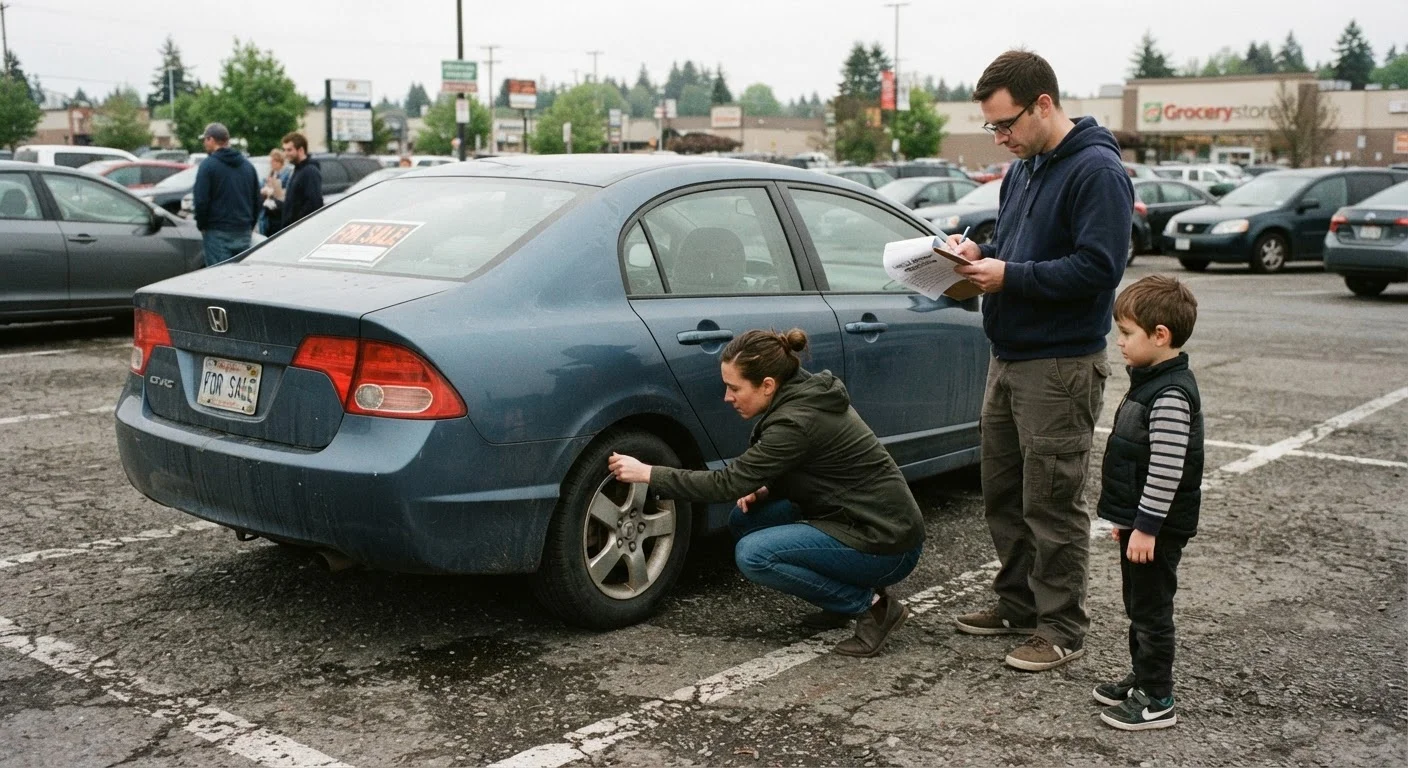
Every used vehicle deserves a thorough physical inspection before money changes hands. Start with a visual check: look for uneven panel gaps, mismatched paint, or rust on the undercarriage. These can indicate prior collision damage or deferred maintenance that a seller may not disclose.
A vehicle history report from a service such as Carfax or AutoCheck uses the VIN to pull reported accidents, title changes, odometer readings, and service records. It will not catch everything, but it surfaces documented issues that should inform your negotiation or your decision to walk away.
The most reliable step is hiring an independent mechanic to inspect the vehicle before purchase. Expect to pay $100 to $200 for a pre-purchase inspection. That cost is small relative to the risk of buying a car with an undisclosed transmission or engine problem. A full checklist of what to review is available in our pre-purchase inspection guide.
Negotiate price and financing
Used-car prices are generally negotiable. Arrive with data: the vehicle's market value from sources such as Kelley Blue Book or Edmunds, any issues the inspection surfaced, and the cost of addressing them. Deducting repair estimates from the asking price is a straightforward, defensible negotiating approach.
On financing, get pre-approved through your bank or credit union before visiting a dealer. Dealer-arranged financing can be convenient, but the dealer typically marks up the interest rate above what the lender charges. Pre-approval gives you a rate to compare against and a ceiling to enforce.
Watch for add-ons presented at signing: extended warranties, paint protection, gap insurance, and similar products. Each one increases the total cost. Evaluate each on its own merits rather than bundling them into the monthly payment without reviewing the terms.
Handle paperwork and close the deal
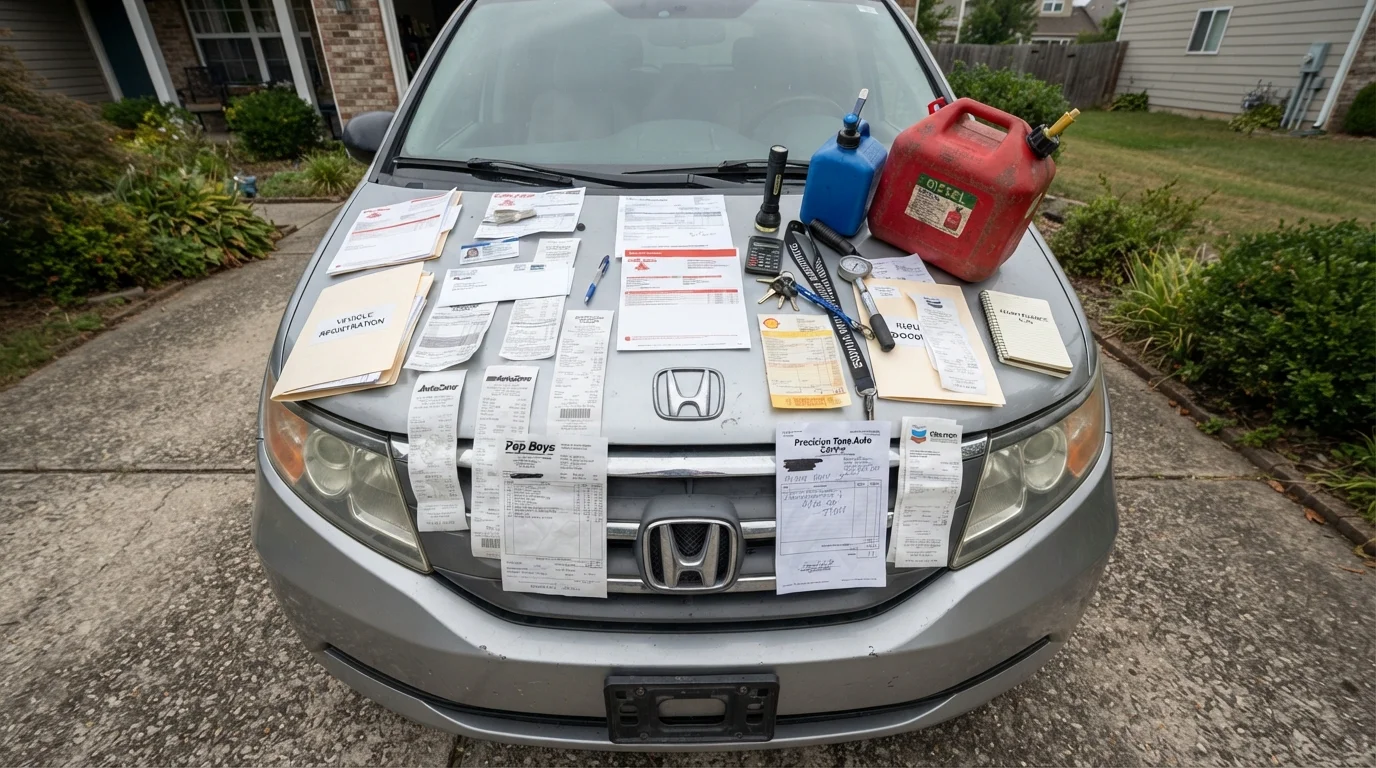
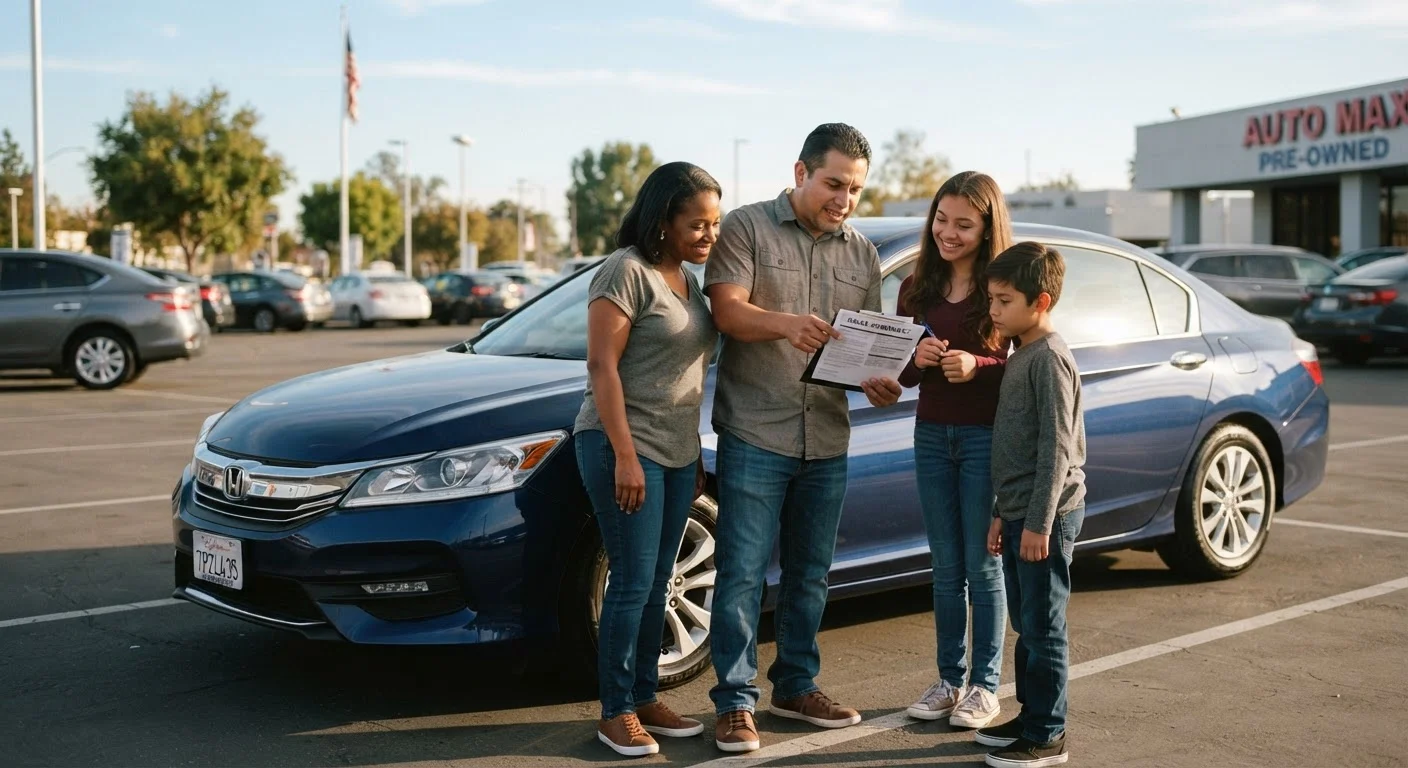
Before you sign anything, read the purchase contract line by line. Confirm that the sale price, any agreed-upon repairs, the trade-in value (if applicable), and the financing terms all match what was discussed. Verbal agreements that do not appear in writing are not enforceable.
For a private-party sale, the seller must sign over the title to you. Verify that the name on the title matches the seller's identification and that the title is free of liens. Some states require a bill of sale as a separate document. Check your state's DMV website for specific registration requirements and any emissions or safety inspection deadlines that apply after purchase.
After closing, add the car to your insurance policy before driving it. Most insurers allow a short grace period for newly acquired vehicles, but confirm that window with your provider rather than assuming coverage exists. Keep copies of all signed documents, including the title transfer, in a secure place.