Why the purchase price misleads families
Most families spend weeks comparing purchase prices and monthly payments, yet those two numbers represent only a fraction of what a vehicle will cost over time. The gap between what a car costs to buy and what it costs to own is where household budgets get strained.
A practical way to think about it: the purchase price is a one-time event. Fuel, insurance, maintenance, registration, and loan interest are recurring events, repeated every month or every year for as long as the vehicle is in the driveway. Over five years, those recurring costs frequently exceed the original purchase price.
Understanding where money actually goes makes it possible to choose a vehicle that fits the household budget, not just the financing approval.
Build a full-cost estimate before you decide
Before committing to a vehicle, add up estimated annual fuel, insurance, registration, and maintenance costs alongside any loan payment. Several nonprofit and government consumer resources publish per-mile ownership cost estimates by vehicle class that can help you build a realistic annual budget.
Depreciation: the cost most families ignore
Depreciation is the loss in a vehicle's market value over time. A new vehicle typically loses a significant portion of its value in the first year, with the decline continuing, though more slowly, through subsequent years. Because this loss does not show up as a monthly bill, many families do not count it as a real expense until they trade in or sell the vehicle and receive less than expected.
For families who buy new vehicles frequently, depreciation represents a substantial transfer of wealth away from the household. Holding a vehicle longer after the steepest early depreciation has already occurred is one of the most effective ways to reduce this cost per year of ownership.
15-20%
New vehicle value lost in year one
Automotive cost research organizations consistently place first-year depreciation for new vehicles in this range, though the rate varies by vehicle type and market conditions.
$9,000-$12,000
Estimated annual ownership cost, mid-size vehicle
This range reflects all-in costs including depreciation, fuel, insurance, maintenance, and financing, based on general automotive ownership cost research.
40-50%
Share of five-year TCO from depreciation
For new vehicle purchases, depreciation typically accounts for the largest single share of total five-year ownership cost according to automotive research organizations.
Financing interest compounds the total
When a vehicle is purchased with a loan, the interest paid over the life of that loan is an ownership cost. On a six or seven-year loan at a moderate interest rate, the total interest paid can add several thousand dollars to the effective purchase price. Longer loan terms lower the monthly payment but increase total interest paid.
Families weighing whether to finance or pay cash can find a structured comparison in this overview of financing versus paying cash, which covers how interest rates, savings goals, and cash flow interact.
Insurance, registration, and taxes
Auto insurance is not optional for most families, and its annual cost depends on many factors beyond driving record. The vehicle's make, model, safety ratings, repair cost, and theft rate all affect premiums. Location matters too: urban households typically pay more than rural ones due to accident frequency and repair costs in the area.
For a deeper look at what shapes insurance pricing, this article on why insurance costs vary between neighbors covers the main factors clearly.
Annual registration fees and, in some states, personal property taxes on vehicles are additional recurring costs. These vary enough between states that they can be a meaningful factor when comparing total ownership scenarios.
Maintenance and repairs over time
Scheduled maintenance, tires, brakes, and unplanned repairs make up a cost category that grows as a vehicle ages. Skipping oil changes or delaying tire rotation to save money in the short term tends to accelerate wear on more expensive components. A timing belt that costs a few hundred dollars to replace on schedule can cost several times that if it fails and damages an engine.
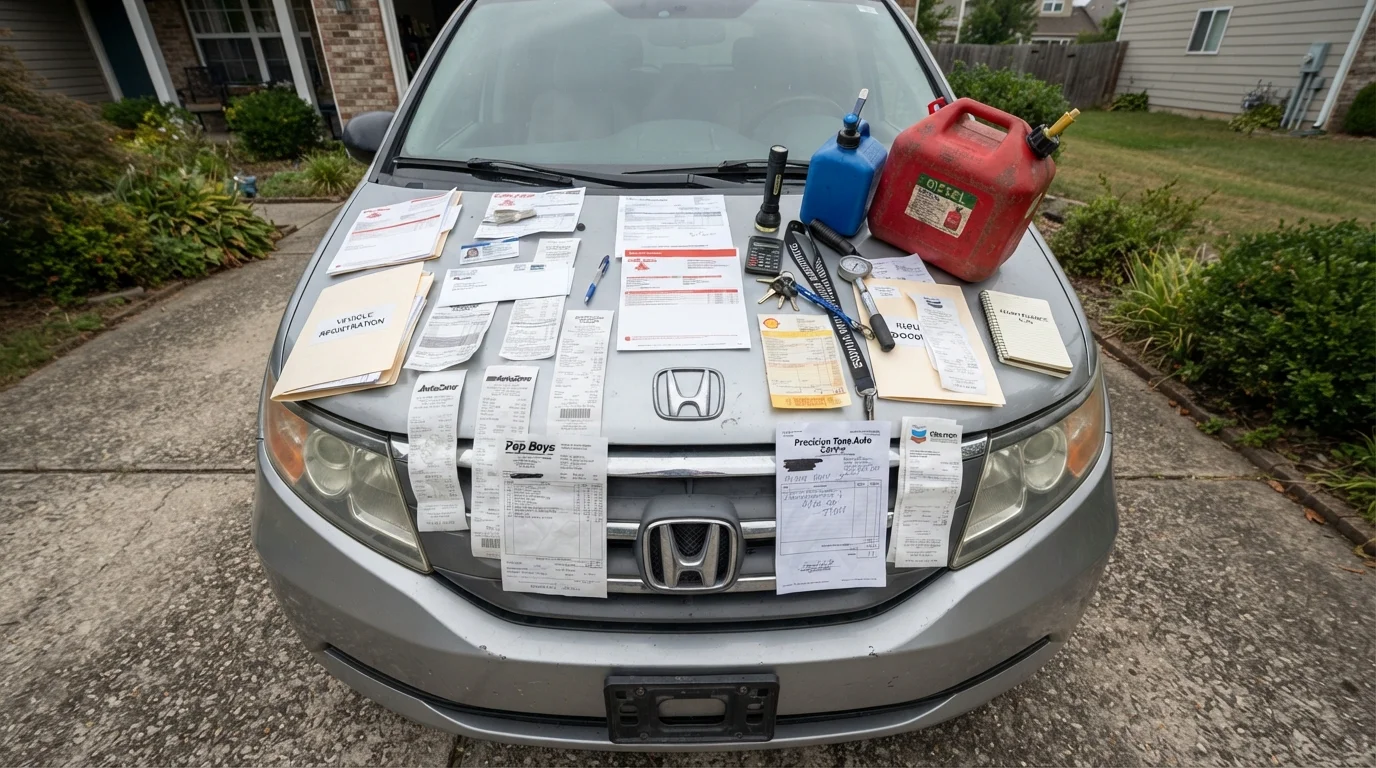
Families who keep thorough maintenance records and follow manufacturer schedules generally spend less on total repairs over a vehicle's life. Vehicles with strong reliability records in independent assessments also tend to generate fewer unplanned repair bills, which matters for families managing a tight monthly budget.
Fuel costs and how driving habits affect them
Fuel is the most visible recurring cost because families pay it at the pump every week or two. Fuel cost per year depends on how much the family drives, the vehicle's fuel economy, and local gas prices. A vehicle rated at 20 mpg costs significantly more to fuel than one rated at 30 mpg over the same annual mileage, and that difference accumulates over years of ownership.
Driving habits also affect fuel costs. Consistent highway driving at moderate speeds uses less fuel per mile than frequent stop-and-go city driving for most gasoline vehicles. Roof cargo carriers, underinflated tires, and heavy loads all reduce fuel economy in measurable ways.
Families considering leasing rather than buying should also account for mileage limits, which affect both fuel planning and potential end-of-lease charges. This overview of leasing for families explains how lease terms translate into real costs.