
What the choice actually comes down to
When a family buys a vehicle, the payment method shapes two things: total cost paid and household cash flow. Those two factors pull in opposite directions. Paying cash minimizes total cost. Financing preserves cash on hand. Understanding that tension is more useful than declaring one path universally correct.
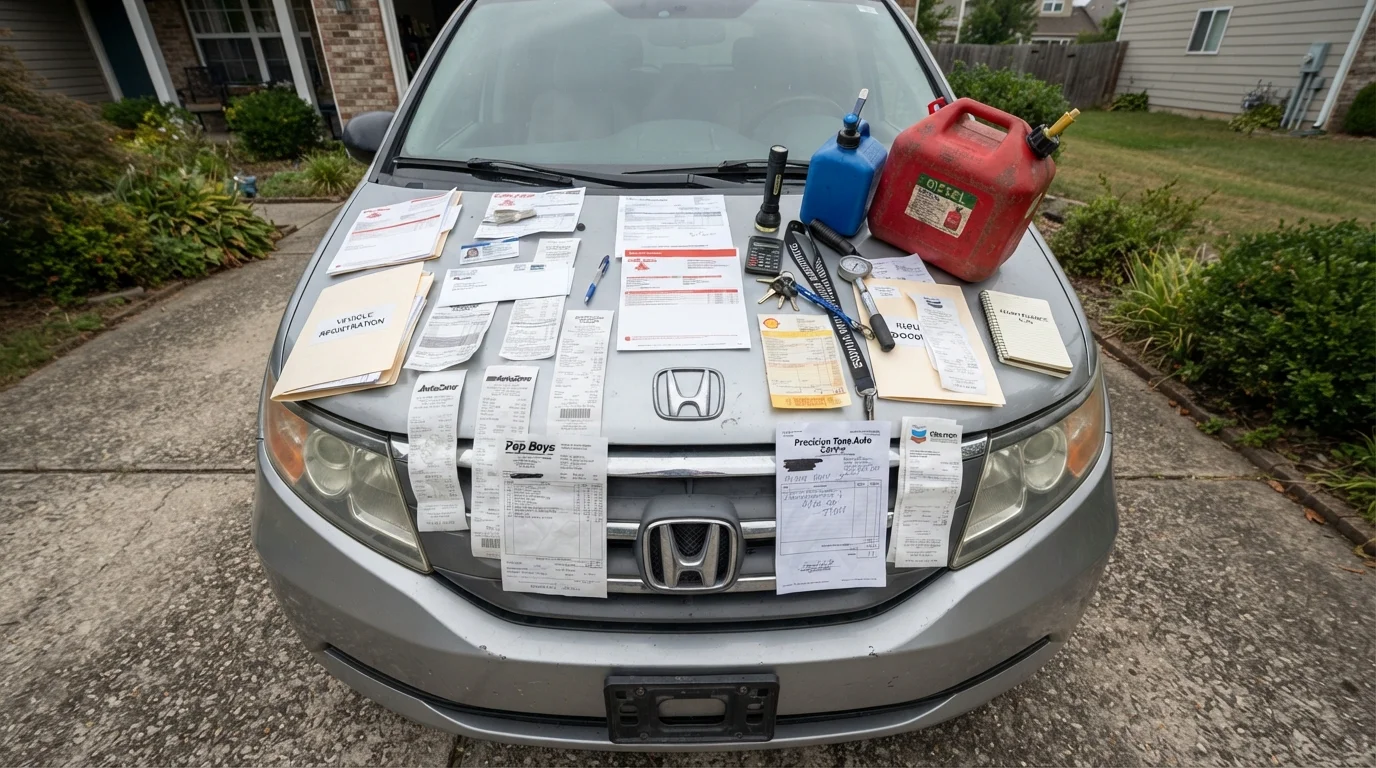
Before comparing the two, it helps to have a clear picture of what vehicle ownership costs beyond the sticker price. Hidden ownership costs such as insurance, registration, maintenance, and depreciation all factor into whether tying up a large sum of cash in a vehicle makes financial sense for your household.
Financing and leasing are different choices
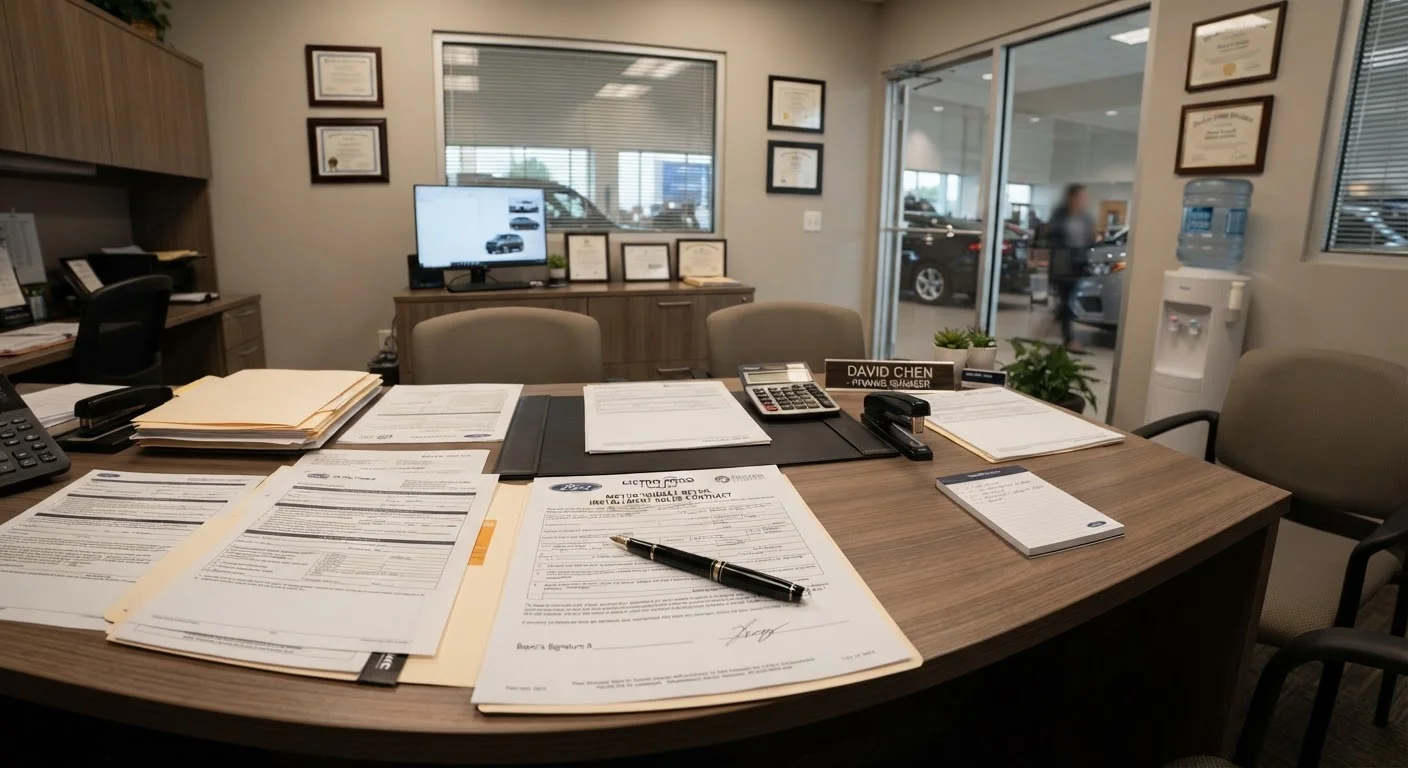
Financing a vehicle purchase and leasing a vehicle are not the same transaction. With financing, the buyer builds equity and eventually owns the car outright. With a lease, monthly payments cover usage during a set term, and the vehicle is returned at the end unless a purchase option is exercised. If you are still deciding which structure fits your household, reviewing how leasing works before comparing cash versus financing may save time.
The case for paying cash
Paying the full purchase price upfront removes interest from the equation entirely. On a $25,000 vehicle financed at 7% over 60 months, a buyer pays roughly $5,500 in interest above the vehicle's price. That figure climbs with higher rates or longer terms. Eliminating it is a concrete, guaranteed saving.
Cash buyers also carry no monthly obligation. If income drops due to job loss or a medical event, there is no lender to satisfy. That absence of a required payment is real financial security, not just a psychological comfort.
Sellers, including private sellers, sometimes accept a lower price when a buyer can close without financing contingencies. The negotiating position is stronger when no third party needs to approve the transaction.
No interest charges on the vehicle purchase
Every dollar paid is equity in the vehicle, with nothing added for borrowing costs. On a mid-priced vehicle, this can represent several thousand dollars in savings over a comparable loan term.
No monthly loan payment obligation
Removing a fixed monthly obligation reduces financial pressure if income becomes irregular. This can matter significantly for families with variable or seasonal earnings.
Simpler transaction with fewer third-party conditions
Cash buyers do not need lender approval, which can speed up a private-party sale and sometimes supports negotiating a lower price.
Guaranteed cost saving, unlike investment returns
The interest saved by paying cash is a certain outcome. Any expected gain from keeping cash invested depends on market performance, which is not predictable.
The case for financing
A vehicle purchase often runs $15,000 to $40,000 or more. Committing that sum in cash can hollow out an emergency fund or derail saving for other goals. A household that spends its liquid savings on a car and then faces a job loss or major repair is in a genuinely difficult position.
When loan rates are low relative to what savings or investments earn, financing can work in the buyer's favor mathematically. If a loan costs 4% annually and invested money earns more than that over the same period, keeping cash invested may produce a net gain. That calculation depends on actual market returns, which are not guaranteed, so this reasoning deserves honest scrutiny rather than assumption.
Lenders report payment history to credit bureaus, so a well-managed auto loan can strengthen a credit profile over time. Families planning a mortgage application in the next few years sometimes weigh this as a factor, though the impact varies by individual credit history.
Some manufacturers offer promotional financing at very low rates to move specific models. When a rate of 0% or 1% is available, financing preserves cash at essentially no cost. However, these promotions sometimes require buyers to forgo a cash rebate, so comparing the two options in dollar terms before signing matters. See also dealership F&I products to understand what else may be presented during the signing process.
Large cash outlay reduces financial liquidity
A depleted emergency fund leaves a household exposed if a job loss, medical bill, or home repair follows the vehicle purchase. Rebuilding savings while paying other bills can take months or longer.
Opportunity cost if cash could earn more than loan rate
When a loan rate is lower than what invested funds historically return, keeping money invested may produce a net gain. This comparison requires honest assumptions about future returns.
Misses low or zero-percent promotional financing
Manufacturer-subsidized financing occasionally offers rates below inflation, making cash buyers who forgo these deals pay more in effective terms. However, promotions often require giving up a cash rebate.
No credit-building benefit from on-time payments
A responsibly managed installment loan adds positive payment history to a credit file. Families with thin credit histories lose this potential benefit when paying cash.
How to compare the two paths in your own situation
Start with your emergency fund. Financial planners commonly recommend three to six months of expenses in liquid savings. If paying cash for a vehicle would drop reserves below that level, financing deserves serious consideration regardless of the interest cost.
Next, calculate the actual interest cost of any loan you qualify for. Use the loan amount, interest rate, and term to find total interest paid. That figure is the concrete price of choosing financing over cash.
Then assess what the cash would otherwise do. If it sits in a savings account earning less than the loan rate, paying cash is cheaper. If it stays invested in assets that have historically outpaced the loan rate, the math may favor financing, with the caveat that investment returns are not guaranteed.
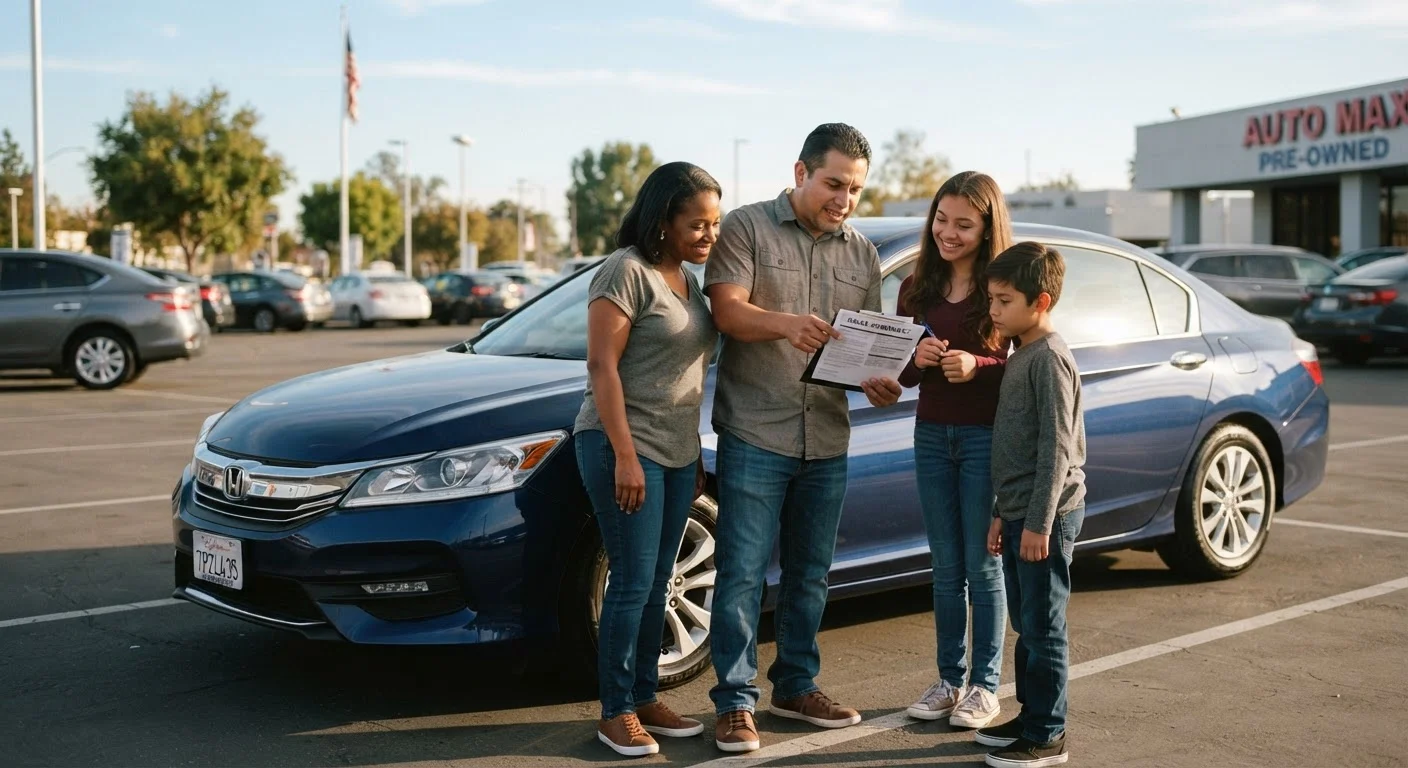
Finally, check whether the dealer is offering a promotional rate or a cash rebate but not both. Calculate which yields the lower total cost. A step-by-step walkthrough for used-car buyers covers how to approach the full purchase process, including the financing conversation at the dealership. Families considering an alternative to ownership entirely can also review what leasing involves before committing to either purchase path.
~$5,500
Interest paid on a typical 60-month auto loan
Based on a $25,000 loan at 7% APR over 60 months, illustrating the concrete cost of financing at prevailing rates.
3-6 months
Recommended liquid emergency savings
A widely cited guideline from consumer finance organizations; depleting reserves below this level to pay cash for a vehicle is generally considered a financial risk.