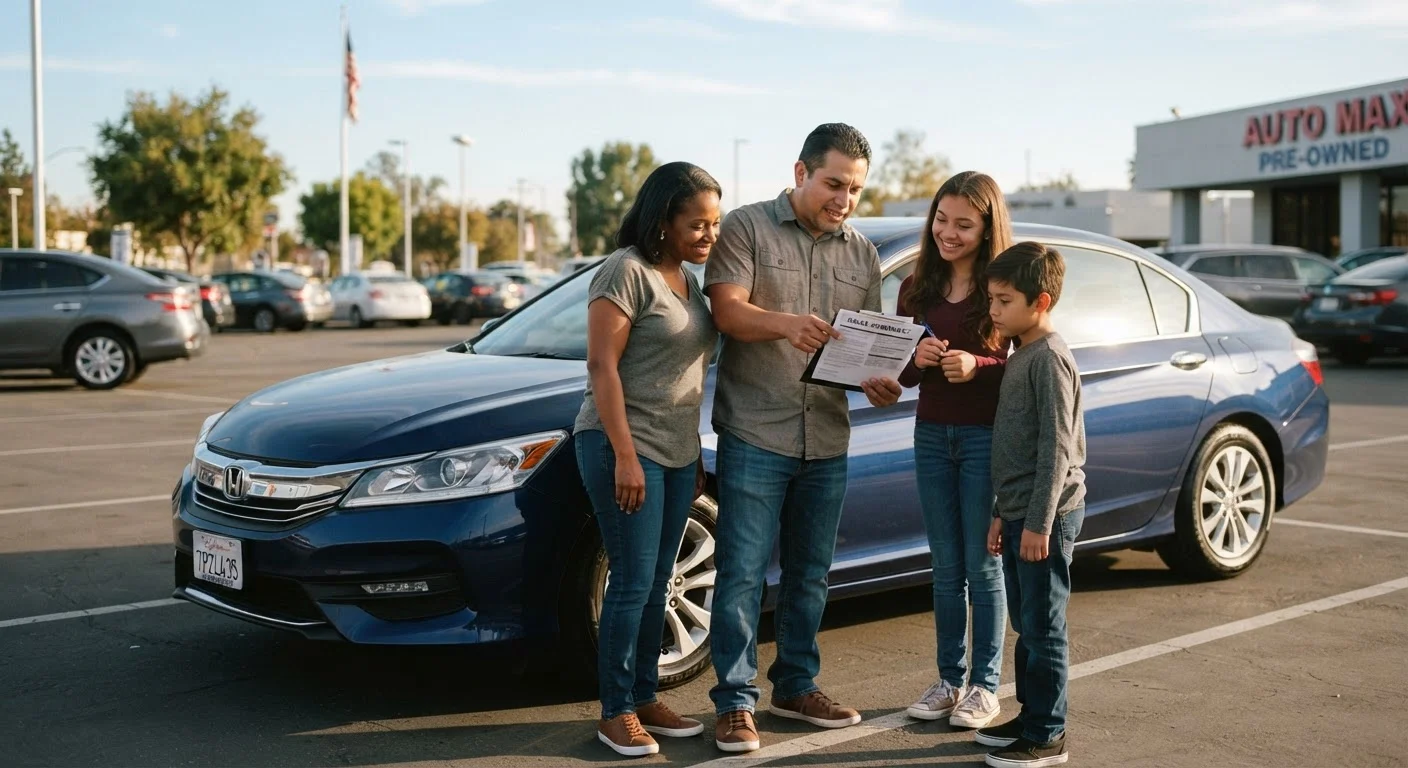
Run through this checklist before handing over any money. It covers mechanical, safety, and paperwork items every buyer should verify.
Key Takeaways
A pre-purchase inspection typically costs $100 to $150 and can prevent repair bills several times that amount.
Vehicle history reports reveal title issues, odometer discrepancies, and prior accident records.
Checking all safety systems before buying protects every passenger, not just the driver.
Paperwork verification is as important as the mechanical check and should never be skipped.
Any seller who refuses an independent inspection is a red flag worth taking seriously.
Why this checklist matters before you sign anything
A used vehicle purchase is one of the larger financial decisions a family makes. The sticker price is only part of the story. Deferred maintenance, hidden collision damage, and title problems can turn a seemingly affordable car into an ongoing expense. This checklist gives you a structured way to catch those problems before money changes hands.
Work through it in order. The paperwork section comes first because a title problem or odometer discrepancy can end the evaluation immediately, before you spend time on the mechanical walk-around. If you are comparing CPO and standard used options, understanding what separates them will help you decide how much independent verification each type still requires.
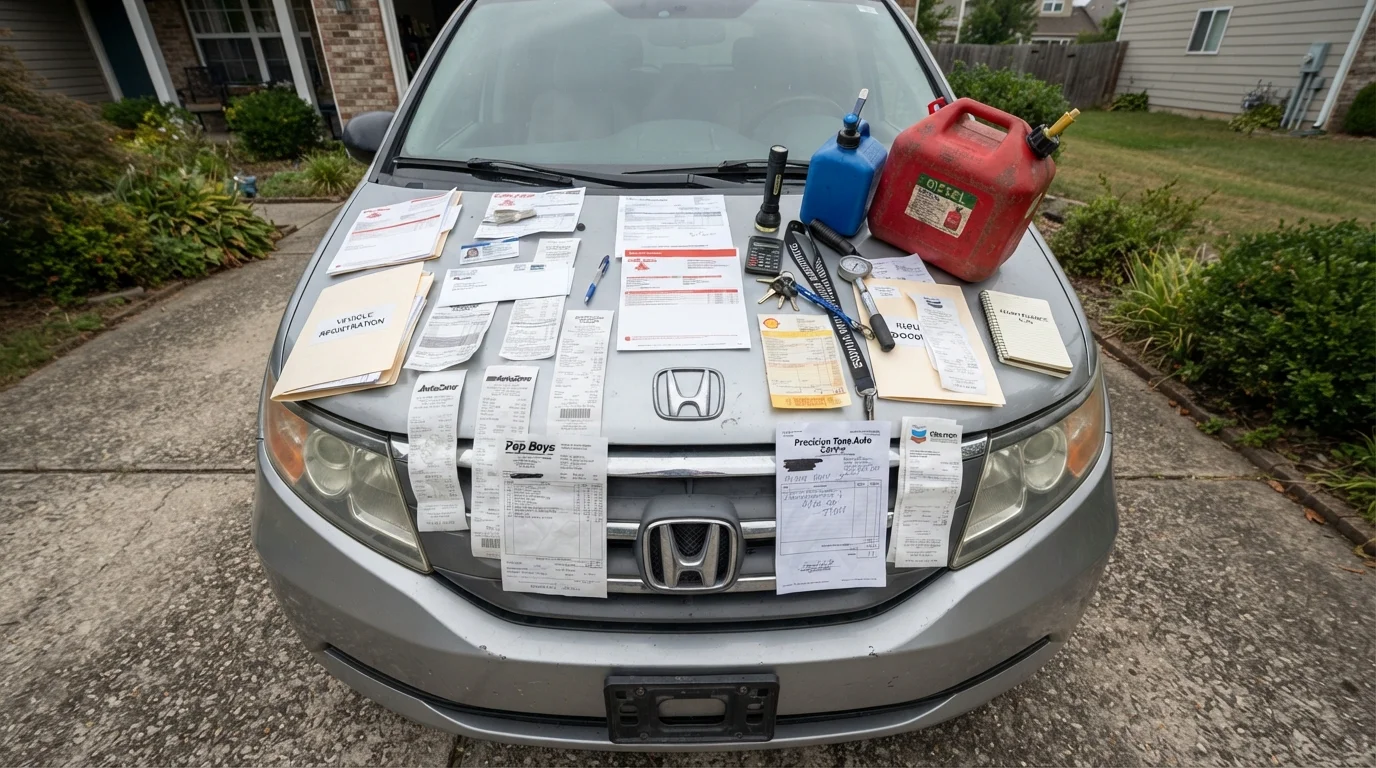
Vehicle history report service (e.g., Carfax or AutoCheck)
Reveals accident history, title brands, ownership count, and odometer records for the specific VIN.
Required
NHTSA VIN lookup (nhtsa.gov)
Free government tool that shows open and completed safety recalls tied to a vehicle's VIN.
Optional
OBD-II scanner
Reads stored and pending diagnostic trouble codes from the vehicle's onboard computer.
Required
Flashlight or phone torch
Useful for inspecting the engine bay, wheel wells, and undercarriage in low-light conditions.
Optional
Tread depth gauge
Measures remaining tire tread so you can estimate how soon replacement will be needed.
Required
Notepad and phone camera
Lets you document findings with photos and written notes to review or share with a mechanic.
The full inspection checklist
Run through every group below at the dealership or private sale location. Bring a phone for photos and a notepad for anything that needs follow-up.
Paperwork and history
Pull a vehicle history report using the VIN (Vehicle Identification Number) to check for prior accidents, title brands, and odometer readings.Must
Confirm the title is clean, with no salvage, rebuilt, or lemon-law buyback designation.Must
Verify that the name on the title matches the seller's ID exactly.Must
Check for open recalls using the NHTSA VIN lookup tool at nhtsa.gov to confirm whether any safety recalls have been completed.Must
Request available maintenance records to gauge how consistently the car was serviced.Should
Exterior condition
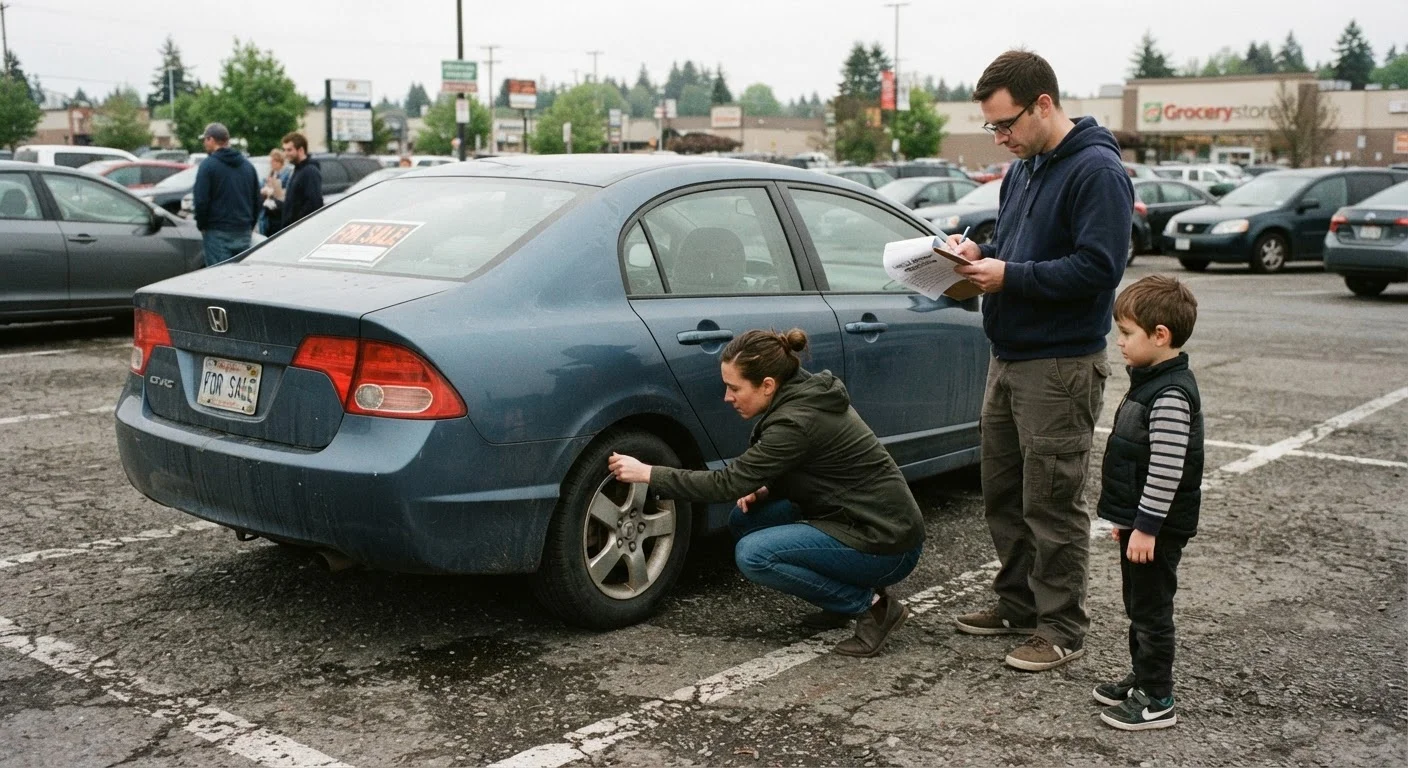
Inspect all body panels in direct light for mismatched paint, rippling, or overspray, which can indicate prior collision repair.Must
Check that all doors, the hood, and the trunk open and close flush, with even gaps between panels.Should
Examine the windshield and all glass for chips or cracks that may fail a state inspection or spread further.Should
Look at tire tread depth and wear pattern: uneven wear across a single axle can signal alignment or suspension problems.Must
Under the hood
Check the oil dipstick for level and color; milky or foamy oil can indicate coolant mixing with engine oil, a serious sign.Must
Inspect coolant, brake fluid, and power steering fluid reservoirs for proper levels and obvious contamination.Must
Look for cracked hoses, frayed belts, or corrosion on battery terminals.Should
Check for fluid stains or fresh grease on the engine block, which may indicate recent leak repairs or active leaks.Should
Interior and safety systems
Test every seat belt buckle and retractor; non-functioning belts are a safety and legal issue.Must
Confirm that the airbag warning light goes off within a few seconds of starting the engine, indicating the system is not disabled or faulted.Must
Test all power windows, locks, mirrors, and seat adjustments for full function.Should
Check that the climate control system produces both heat and cold air, and that all vents direct airflow correctly.Should
Inspect the rear seating area for child seat anchor (LATCH) points and confirm they are undamaged.Nice to have
Test drive
Drive the car at highway speed and listen for vibration, pulling to one side, or unusual noise from the drivetrain.Must
Test the brakes at moderate speed for pulsation, noise, or excessive pedal travel.Must
Accelerate firmly from a stop to check for transmission hesitation, slipping, or rough shifting.Should
Make several full steering turns in a parking lot to check for grinding or clunking from CV joints or the steering rack.Should
Independent mechanic inspection
Schedule a pre-purchase inspection with an independent mechanic before finalizing the purchase; this typically costs $100 to $150.Must
Ask the mechanic to put the car on a lift to inspect the frame, undercarriage, and exhaust for rust, bending, or uneven wear.Must
Request an OBD-II scan for stored diagnostic trouble codes, including codes the seller may have cleared recently.Should
Ask for a written report so you have documentation for any price negotiation or to walk away with a clear record.Nice to have
Never skip the independent mechanic
A seller's willingness to let you bring the car to an independent shop is a reasonable expectation in any private or dealer transaction. If a seller declines or pressures you to decide without that inspection, treat it as a sign the car may not hold up to scrutiny. The inspection fee is small relative to the cost of a major repair discovered after purchase.
After purchase, ownership costs continue well beyond the inspection day. Hidden recurring costs like registration fees, insurance adjustments, and scheduled maintenance often surprise first-time used-car buyers.
Autos Editorial Team is the collective byline for our editorial team and contributor network. Articles published under this byline or an editorial pen name are researched, written, and reviewed according to our editorial standards for clarity, consistency, and independence before publication.
The content provided on our blog site traverses numerous categories, offering readers valuable and practical information. Readers can use the editorial team’s research and data to gain more insights into their topics of interest. However, they are requested not to treat the articles as conclusive. The website team cannot be held responsible for differences in data or inaccuracies found across other platforms. Please also note that the site might also miss out on various schemes and offers available that the readers may find more beneficial than the ones we cover.