Why the sticker price misleads most shoppers
A smart doorbell or thermostat looks straightforward on the shelf: pay once, bring it home, enjoy it. The actual cost structure rarely works that way. Manufacturers price the hardware aggressively and then recoup margin through software tiers, cloud storage fees, and ecosystem accessories. Understanding that pattern before you buy is the fastest way to avoid regret.
The pattern is not unique to electronics. Recurring ownership costs surprise families in other categories too, and the same logic applies here: the purchase price sets expectations that the ongoing costs then exceed. For a deeper look at how everyday devices fit together in a home, see our introduction to consumer electronics.
The real advantages of smart home technology
Smart devices do provide genuine value when they fit a household's actual needs. The benefits below hold up in practice, provided the setup is done correctly and the right tier of service is chosen.
Genuine energy savings from automated scheduling
Smart thermostats and plugs that operate on occupancy-based schedules can reduce standby power draw meaningfully over a full year. The savings are modest per device but accumulate across a household.
Remote access to locks, cameras, and appliances
Monitoring and controlling devices from a phone while away from home addresses real security and convenience needs that passive hardware cannot replicate.
Automation reduces daily friction
Routines that turn lights off, lock doors, or adjust temperature without manual input save small but consistent amounts of time and attention each day.
Compatible devices work across a single ecosystem
When all devices share a platform, a single app or voice command can control multiple functions simultaneously, which reduces the complexity of managing several gadgets.
Automation is the most durable benefit. A thermostat that adjusts temperature based on occupancy patterns does not require any action after initial setup, and the energy reduction compounds over months. Remote access matters most for security devices: being able to check a camera feed or lock a door from a phone while traveling addresses a real gap that older hardware cannot fill.
The costs most buyers do not anticipate
The disadvantages below are not edge cases. They affect a large share of smart home purchases, particularly when buyers focus on the device price alone.
Subscription fees appear after purchase
Core features such as video history, advanced automations, or remote access often require a paid monthly or annual plan that was not clearly communicated at point of sale.
Hub requirements add hardware cost
Some smart home protocols require a proprietary hub, a separate device that can cost $50 to $150, before any individual gadget will function at all.
Ecosystem lock-in limits future flexibility
Devices built around one manufacturer's platform rarely communicate cleanly with a competing platform, which means switching ecosystems later means replacing hardware rather than just software.
Privacy exposure from always-on data collection
Voice assistants and smart cameras transmit data to cloud servers continuously. Families with privacy concerns face a real trade-off that is not reflected in the purchase price.
Planned obsolescence shortens device lifespan
Manufacturers sometimes discontinue cloud services for older hardware, rendering devices non-functional even when the physical unit is undamaged.
Setup complexity can offset convenience gains
Getting smart devices to work reliably often requires router configuration, firmware updates, and ongoing troubleshooting that takes time most households do not budget for.
Check before you commit
Before purchasing any smart home device, look up three things: whether a hub is required and what it costs, whether cloud storage for video or data is included or paid, and whether the device still functions if the manufacturer's servers go offline. Most product pages bury this information in the FAQ or support documentation rather than the main listing. Taking ten minutes to find these answers can prevent months of unexpected charges.
Compatibility problems are among the most common sources of buyer frustration. Before purchasing any smart device, check whether it requires a proprietary hub (a separate piece of hardware that acts as a central controller), whether it works with the voice assistant already in your home, and whether its cloud service has a free tier or only a paid one. Our household compatibility checklist walks through the same logic for streaming devices, and most of the questions transfer directly to smart home hardware.
Subscription fees: the most overlooked line item
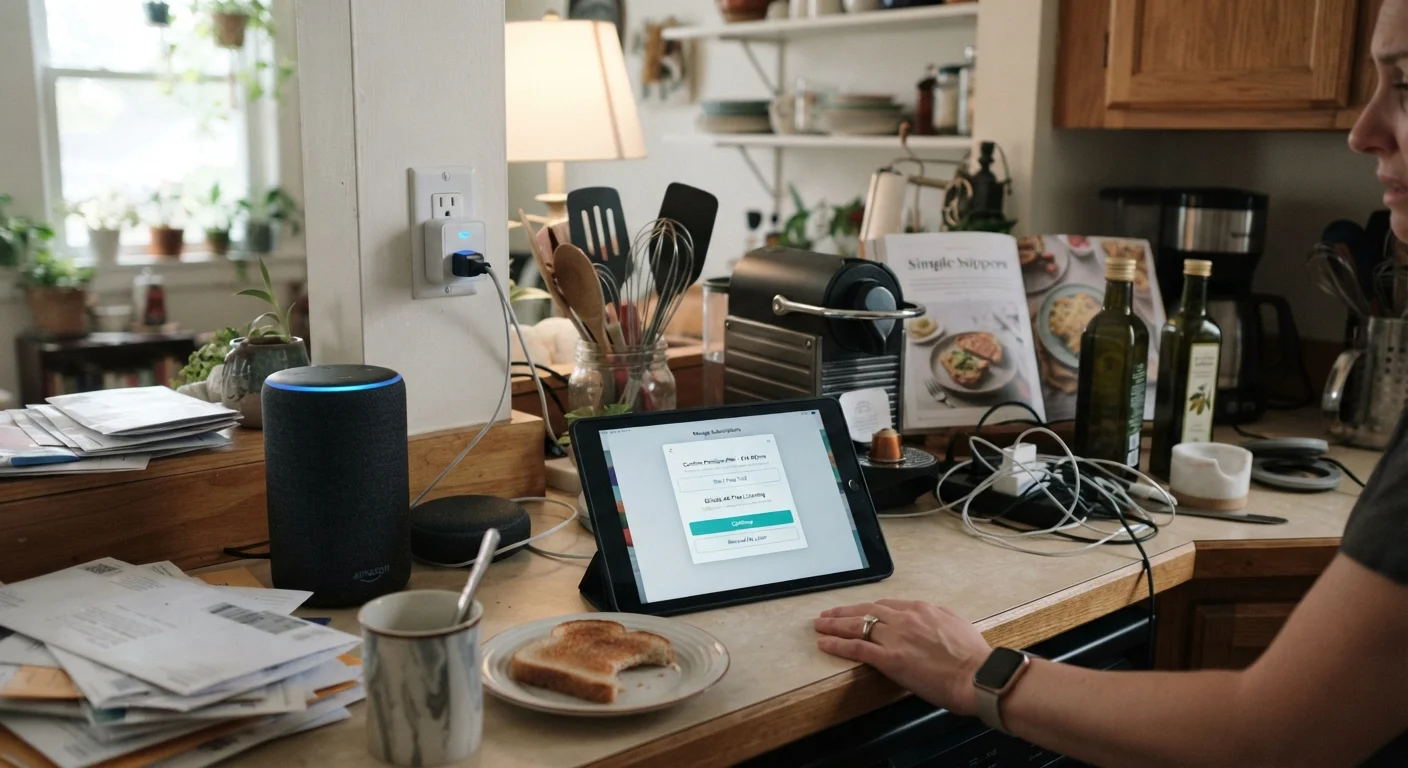
Many smart cameras, video doorbells, and alarm systems offer live viewing for free but lock recorded footage behind a monthly plan. A single device subscription might run $3 to $10 per month. Across four or five devices from different manufacturers, that total reaches $200 or more annually, none of which appeared on the original price tags.
$120-$240
Typical annual subscription cost per household
Consumer advocacy research consistently finds that multi-device smart home households pay this range annually in combined cloud storage and feature subscription fees.
40%
Smart device buyers unaware of required subscriptions
Surveys of connected-device purchasers have found a substantial share did not realize a paid plan was needed to access features shown in product marketing.
The subscription model has also changed how manufacturers handle older hardware. When a company discontinues a cloud service, devices that depended on it stop functioning, even though the physical hardware is intact. That outcome is worth weighing against the apparent savings of buying a less expensive device that has no local storage option. The rent-versus-own calculation for electronics covers this trade-off in more detail.
Getting value without overspending
The most consistent way to reduce total smart home cost is to choose one ecosystem and stay in it. Mixing platforms from different manufacturers creates hub conflicts, app fragmentation, and compatibility gaps that generate both frustration and added expense. Pick the voice assistant your household already uses and look for devices that work natively with it without requiring an extra hub.
Local processing is worth paying a modest premium for. Devices that store data on-device or on a local network rather than a proprietary cloud are less likely to become useless if the manufacturer changes its service terms. Check the product's privacy policy for data retention practices before buying, not after.
Finally, resist the pull of feature lists. A smart plug that schedules a lamp costs a fraction of a full smart lighting system and handles the same core job for most households. Spending on features that match actual daily habits produces better returns than buying maximum capability at maximum price. For broader context on where tech spending tends to outpace its value, the same principle applies to habitual small purchases in other budget categories.