How rental and lease programs for electronics work
Consumer electronics rental programs come in several forms. Short-term rentals from event or AV companies charge a daily or weekly rate. Retail rent-to-own contracts let you take a device home for a recurring payment, with ownership transferring only after you complete all payments. Manufacturer or carrier lease programs, common with smartphones, cover a fixed term after which you return the device, upgrade, or buy it outright.
Each structure looks different on a contract, but all share one characteristic: the company collecting the payments needs to recover the device's cost and earn a profit within the payment window. That arithmetic is worth understanding before you sign anything. For a plain-language overview of common device categories, see our consumer electronics beginners guide.
| Short-term rental | Rent-to-own | Outright purchase | |
|---|---|---|---|
| Upfront cost | Low deposit or none | First payment only | Full price or down payment |
| Total cost over time | Low if duration is brief | Often 2x to 4x retail price | Lowest long-term cost |
| You own the device at the end | No | Yes, after all payments | Yes, immediately |
| Best duration fit | Days to weeks | Months to years | Indefinite ownership |
| Flexibility to return | Built in | Usually allowed with fees | Resale or donation required |
| Effective cost per year of use | High if annualized | Very high | Lowest over several years |
The real cost of rent-to-own contracts
Rent-to-own retailers often advertise a low weekly payment without showing the total payout prominently. A television that sells for around $400 outright might require 78 weekly payments of $18 to own, totaling more than $1,400. That gap represents an effective annual percentage rate that can exceed 100% in many contracts, according to financial literacy organizations that have analyzed these agreements.
State laws vary on how much disclosure is required. Some states mandate that the total payout be printed on the contract; others require only that the weekly payment be visible. Reading the full payment schedule before signing, not just the per-period amount, is the only way to know what you are actually agreeing to pay.
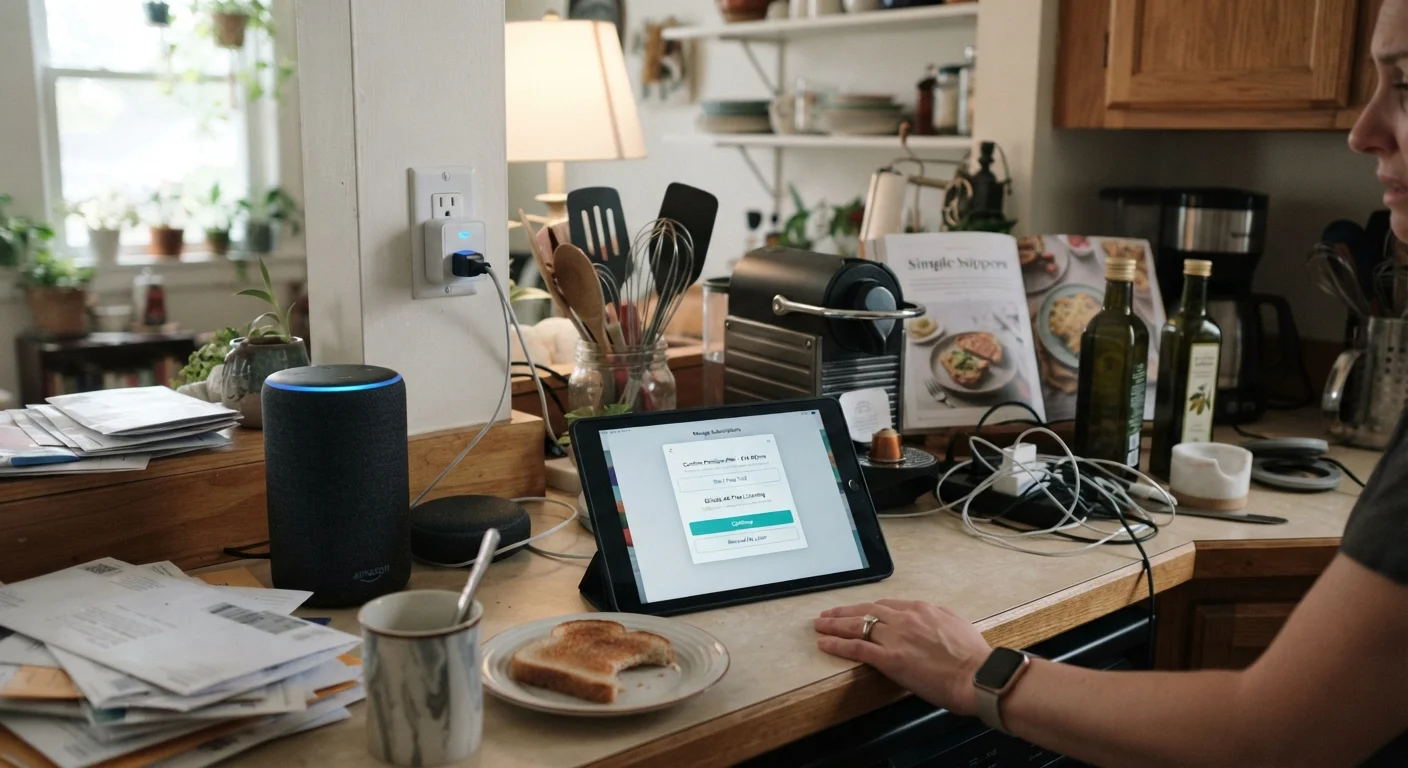
Ongoing ownership also comes with its own fees. See our article on hidden costs of smart home devices for an example of how subscription and maintenance costs compound after the initial purchase.
When renting is worth considering
There are genuine cases where renting electronics makes practical sense. If you need a projector and screen for a single corporate event, renting avoids storing equipment you will use once. A photographer testing whether a particular camera body fits their workflow before spending several thousand dollars is making a reasonable trial use of a rental. A family moving temporarily for work who does not want to ship a large television may reasonably rent for a few months.
The common thread in each of these cases is a defined, short duration. If you cannot state clearly when the rental ends and why you will not want the device after that point, the scenario probably does not justify the cost premium that comes with renting.
Ownership costs that buyers sometimes overlook
Owning a device outright is not free of ongoing costs. Extended warranties, accessories, and repairs all add to the true price of ownership. Devices also depreciate, so a laptop purchased today will be worth considerably less in three years if you ever want to resell it.
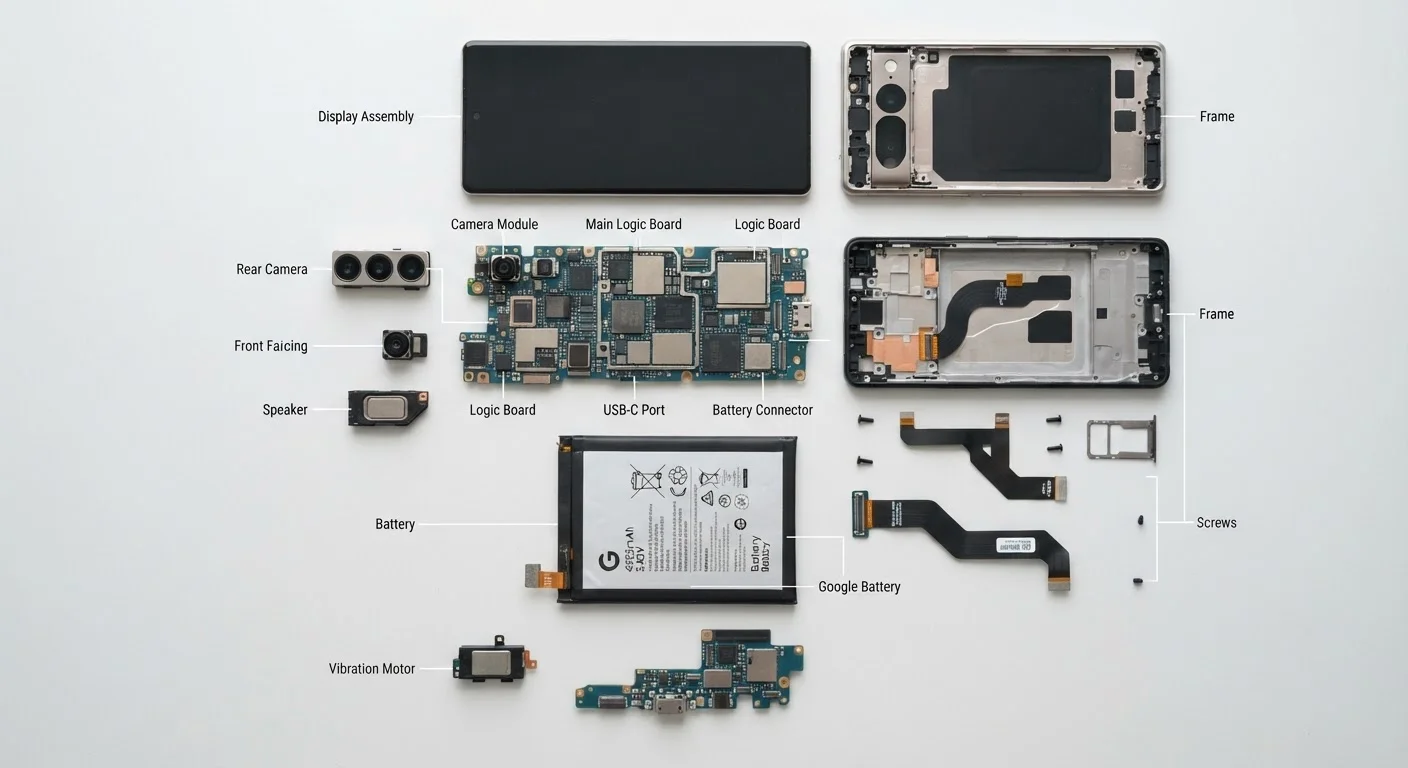
Software support windows matter too. A tablet bought at a low price today may lose operating system updates within two or three years, which can limit app compatibility and create security exposure. Understanding the full lifecycle of a consumer device helps families weigh whether a low purchase price today translates to genuine long-term value.
For households thinking about a streaming device specifically, checking port and ecosystem compatibility before buying avoids regret. Our streaming device compatibility checklist covers what to verify before committing.
How to run the comparison for your situation
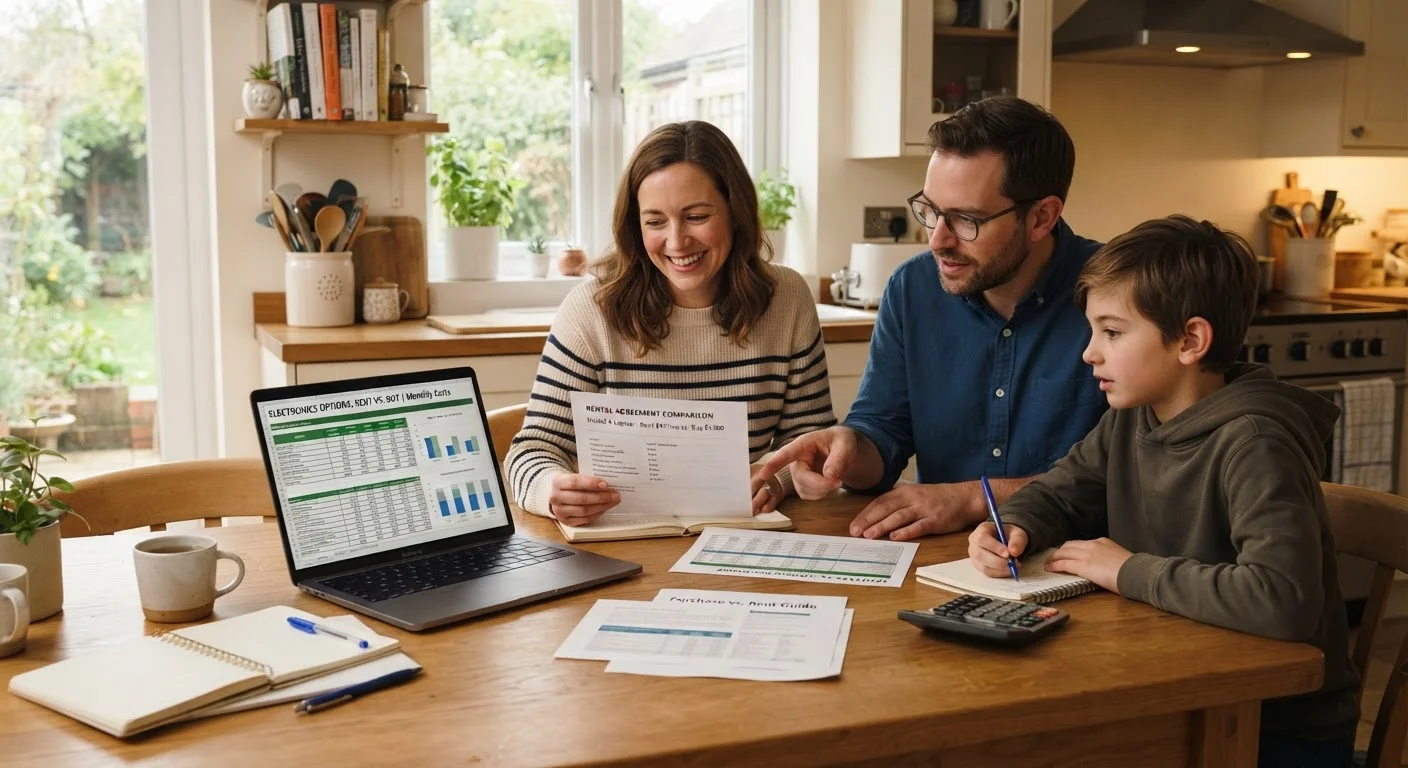
Start with the total payout, not the monthly rate. If a lease or rent-to-own arrangement requires 24 monthly payments of $30, the total is $720. If the device sells outright for $350, you are paying an additional $370 for the convenience of spreading payments. Ask whether that gap could instead be managed by saving for two or three months before purchasing.
If saving upfront is not realistic, consider whether a 0% promotional financing offer from a retailer is available, which would spread the same $350 across several months at no added cost. These arrangements have their own conditions, including deferred interest clauses that can add costs if the balance is not cleared before the promotional period ends, so reading the terms matters here too.
The logic here is similar to the trade-offs involved in financing versus paying outright for any large purchase. Our article on financing vs. paying cash for a vehicle walks through that same total-cost framework in a different context.